Long Island: June-August 1776

The British Plan of Attack

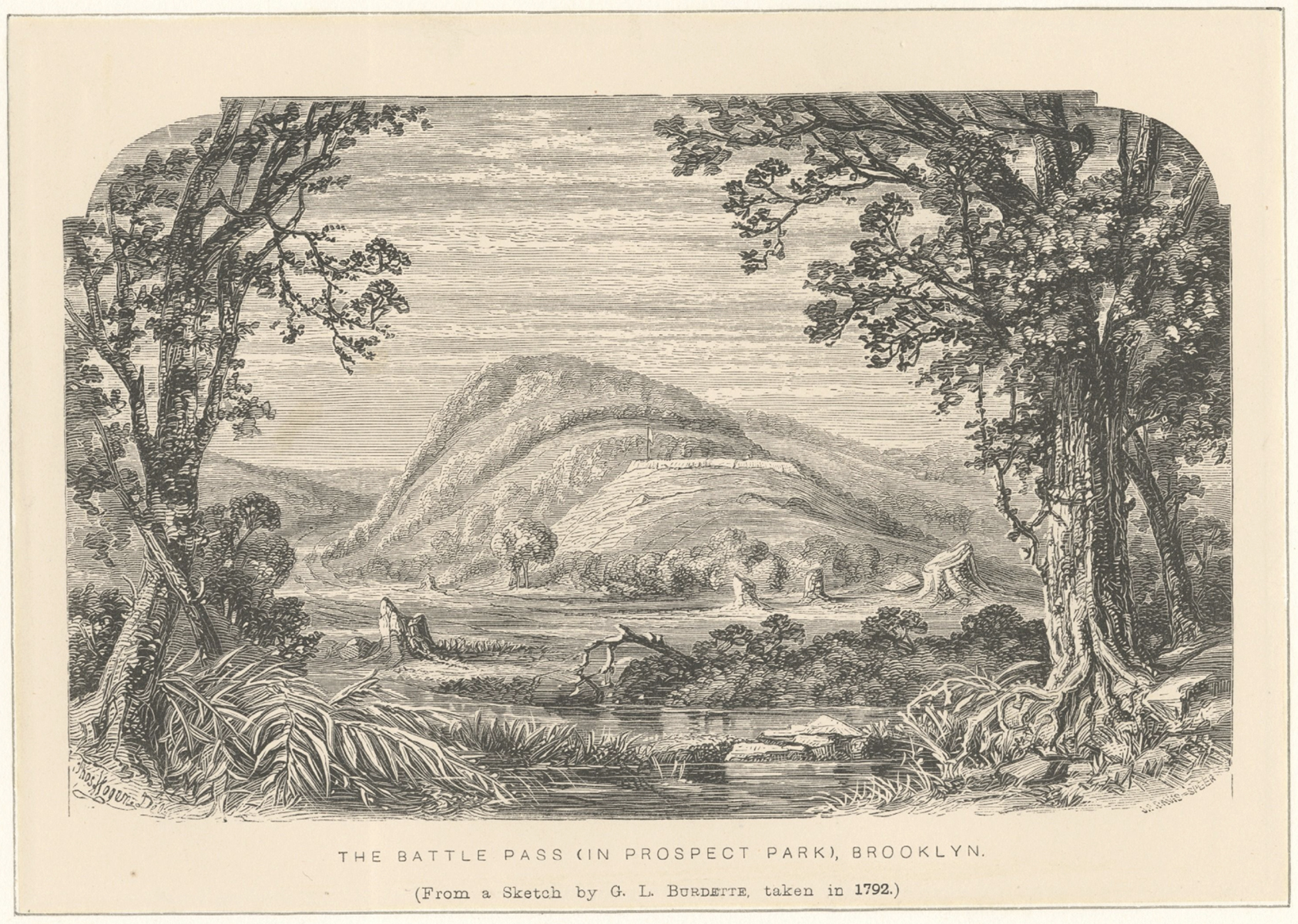
The Miriam and Ira D. Wallach Division of Art, Prints and Photographs: Print Collection, The New York Public Library. “The Battle Pass (in Prospect Park, Brooklyn)” New York Public Library Digital Collections.

The Miriam and Ira D. Wallach Division of Art, Prints and Photographs: Print Collection, The New York Public Library. “The Battle Pass (in Prospect Park, Brooklyn)” New York Public Library Digital Collections.

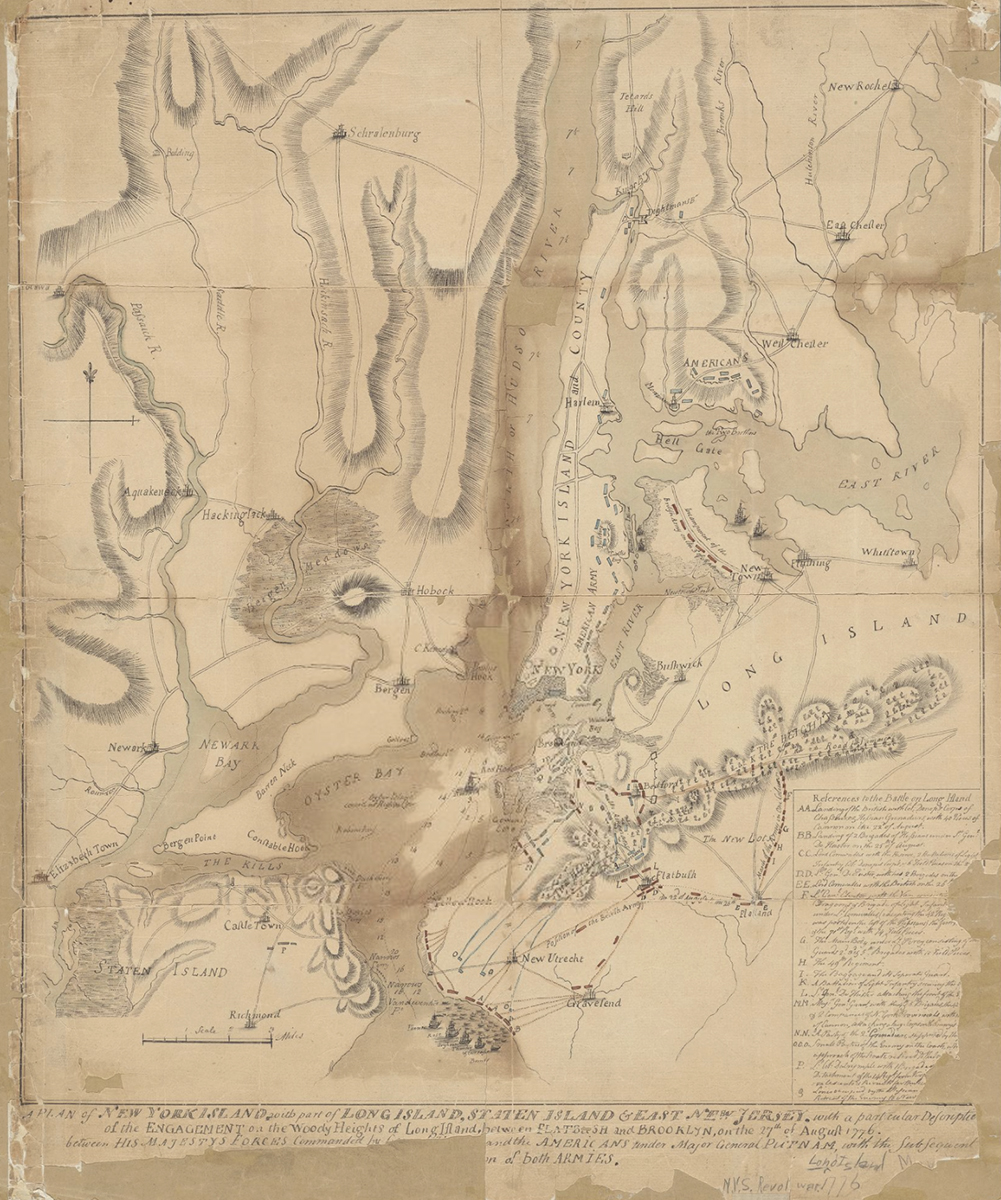
Lionel Pincus and Princess Firyal Map Division, The New York Public Library. “A plan of New York Island, part of Long Island, Staten Island & east New Jersey, with a particular description of the engagement on the woody heights of Long Island, between Flatbush and Brooklyn on the 27th of August 1776” New York Public Library Digital Collections.

Lionel Pincus and Princess Firyal Map Division, The New York Public Library. “A plan of New York Island, part of Long Island, Staten Island & east New Jersey, with a particular description of the engagement on the woody heights of Long Island, between Flatbush and Brooklyn on the 27th of August 1776” New York Public Library Digital Collections.

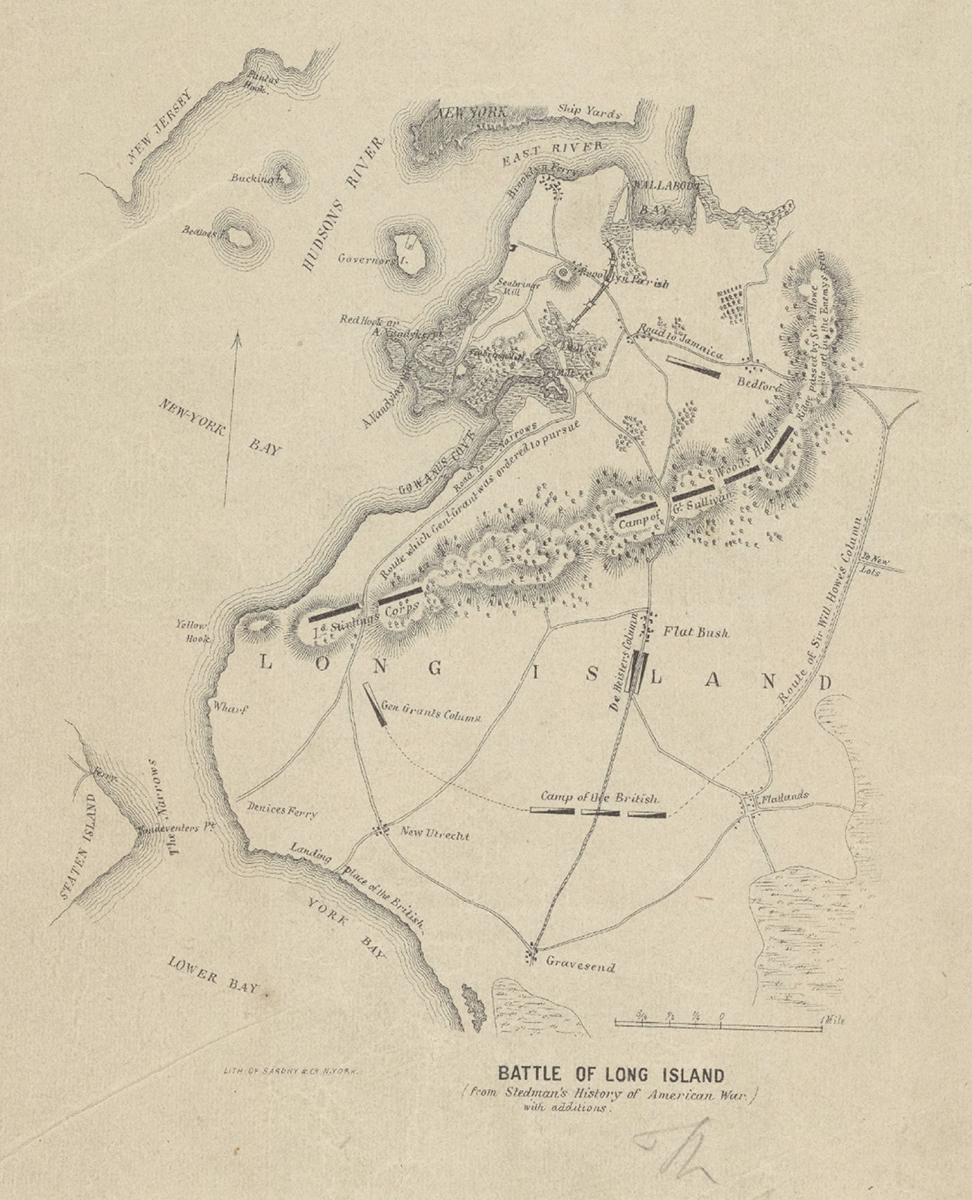
Lionel Pincus and Princess Firyal Map Division, The New York Public Library. “Battle of Long Island: from Stedman’s History of American War with additions” New York Public Library Digital Collections.

Lionel Pincus and Princess Firyal Map Division, The New York Public Library. “Battle of Long Island: from Stedman’s History of American War with additions” New York Public Library Digital Collections.

Assessing the terrain between Gravesend Beach and the Brooklyn Heights where most of the Continental soldiers were entrenched, General Clinton decided to outflank the patriot position by marching northeast through the Jamaica Pass and then curling around the main line of defense. Washington and Putnam had not fortified the pass because their troops were already stretched thin along the Brooklyn Heights. Instead, they relied on foot patrols to alert them to any danger coming from that direction. Clinton, whose knowledge of Long Island dated back to his youth in New York, described his plans to Howe.

"The position which the rebels occupy in our front may be turned by a gorge about six miles from us, through a country in which cavalry may make the avant garde. That once possessed, gives us the island; and in a mile or two further we shall be on the communications with their works at Brooklyn…The attack should begin on the enemy’s right by signal…The moment the corps gets possession of the pass about Howards House the rebels must quit directly or be ruined. I beg leave also to propose that this corps may begin to move at nightfall, so that everything may be ready at its ground break."

Lt. Gen. Henry Clinton to General William Howe
Sources
  • The American Rebellion: Sir Henry Clinton’s Narrative of His Campaign, 1775-1782, with an Appendix of Original Documents.