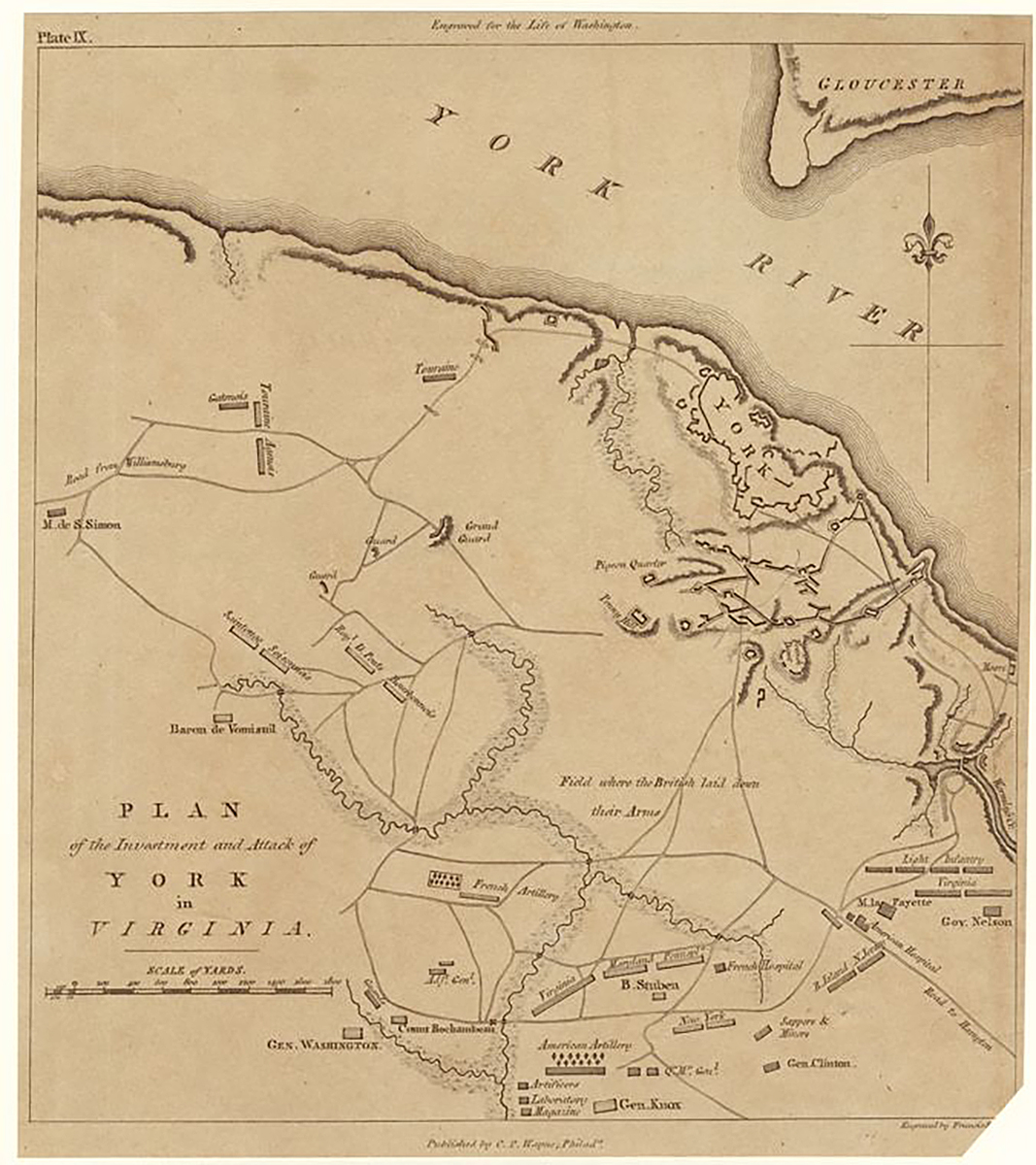
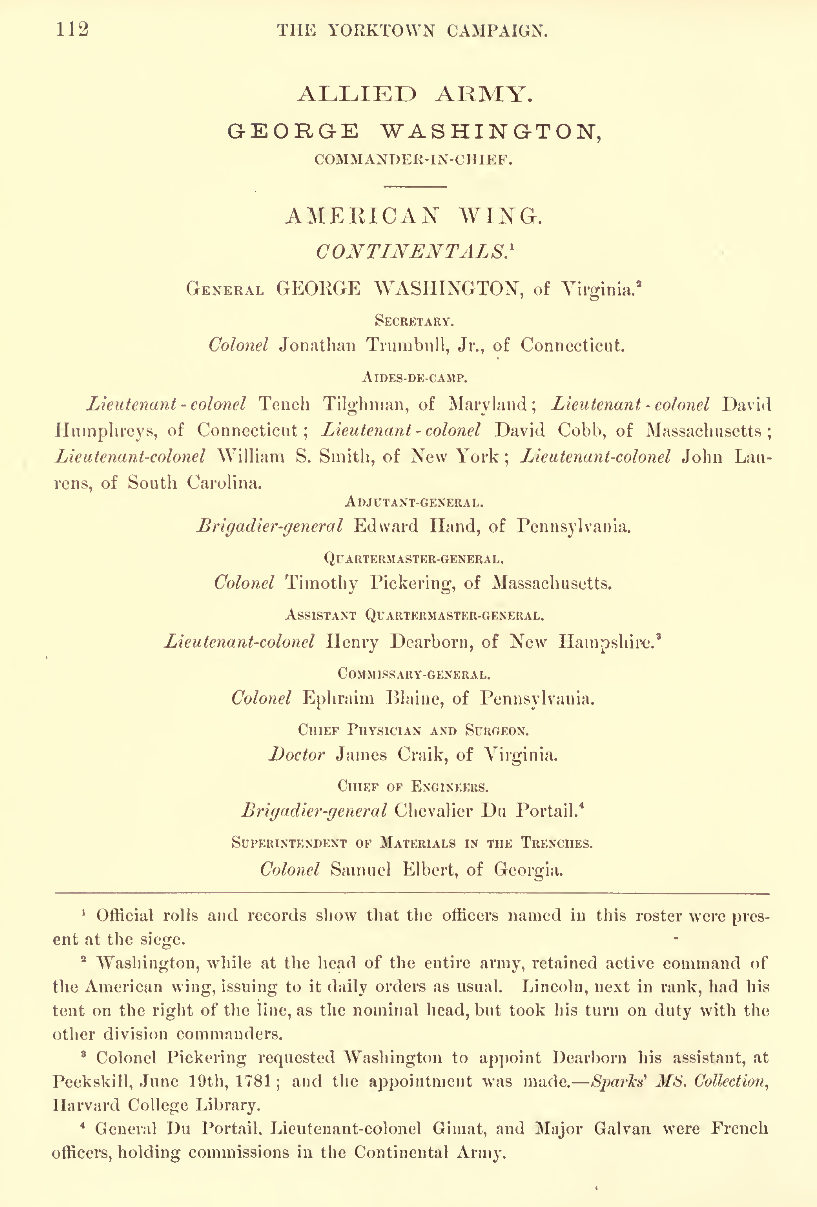
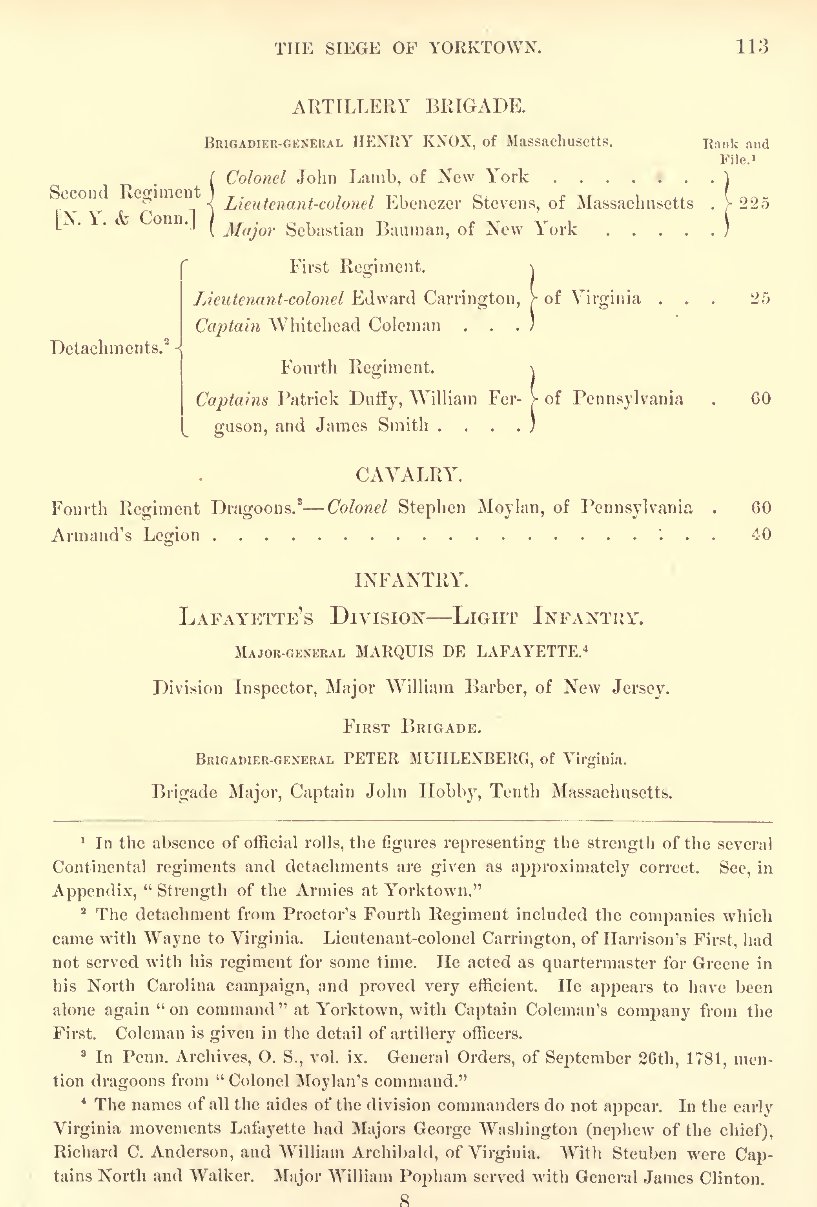
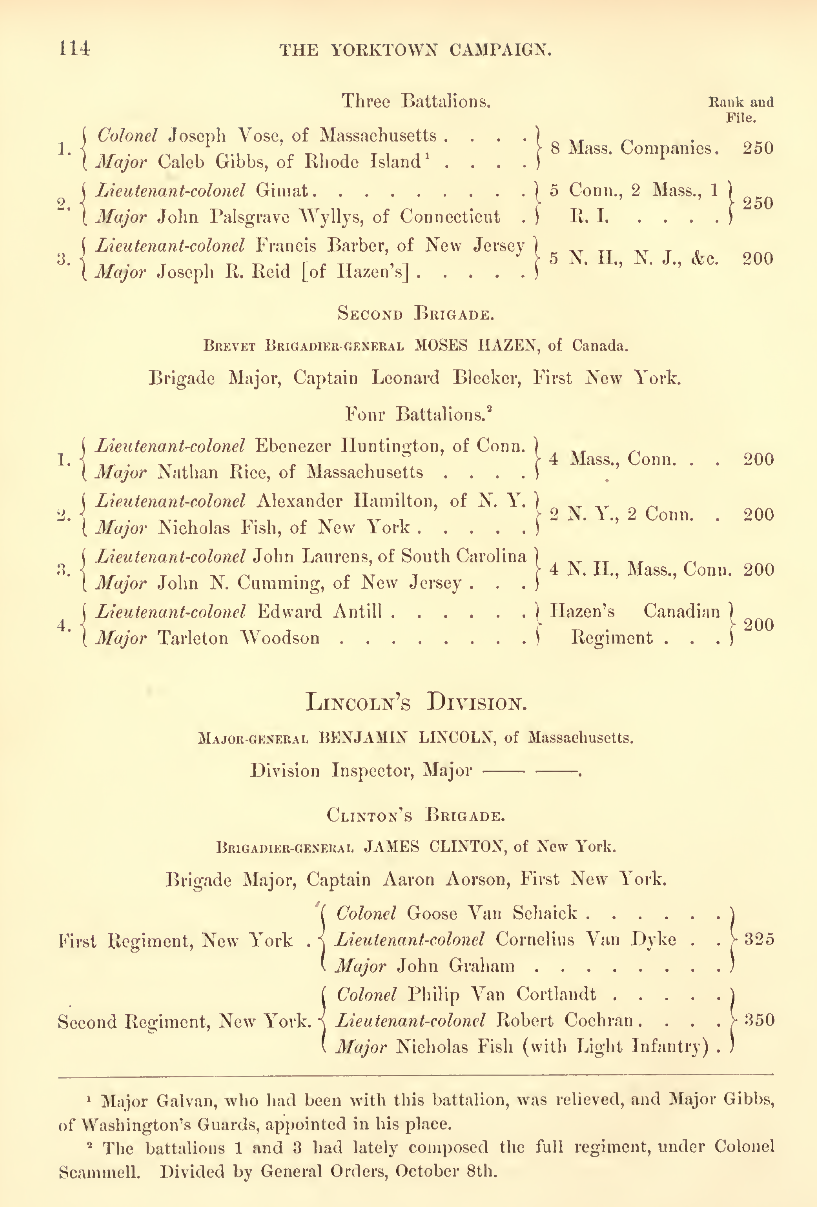
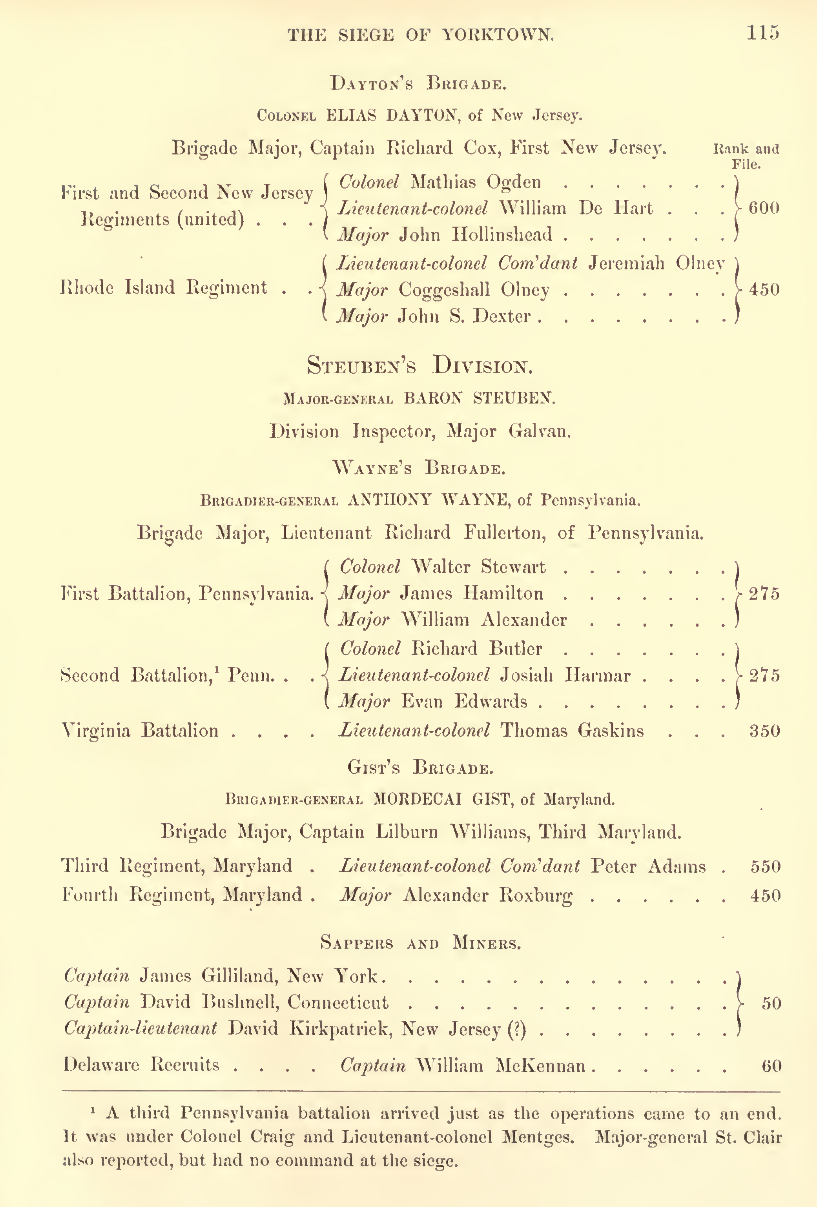
By 26 September, the combined Franco-American armies had assembled some 19,000 soldiers supported by 125 artillery pieces and a 28,000-person naval force; Cornwallis led 9,000 British, German and loyalist soldiers. As the Franco-American army closed around Yorktown at the beginning of October, Cornwallis abandoned most of his positions on the outskirts of the town in order to strengthen his inner defenses. He expected a newly-reinforced British fleet to leave New York City any day now; he needed to hold off his attackers just a few weeks until relief came. Meanwhile, the American and French soldiers occupied the abandoned British defenses and began digging the first parallel (trench) necessary to begin the siege.
"This Evening will complete a Week, since we moved down from Williamsburg. The Enemy very quietly permitted us to invest them, & on the second Night, fearful I suppose of a Storm, evacuated all their Outworks, except one on the Hill above the Creek on the Williamsburg road, which they still hold[.] we immediately took Possession of the Works they left, which have been converted into covering Redoubts for the intended Approaches. These Redoubt[s] are about half a Mile from the Town. The Enemy endeavoured to retard these operations by playing on our Men who were at Work from their Batteries, but with very little Effect, having killed in all only six Men. We have not returned one Shot."
Thomas Nelson to Virginia Delegates 5 October 1781