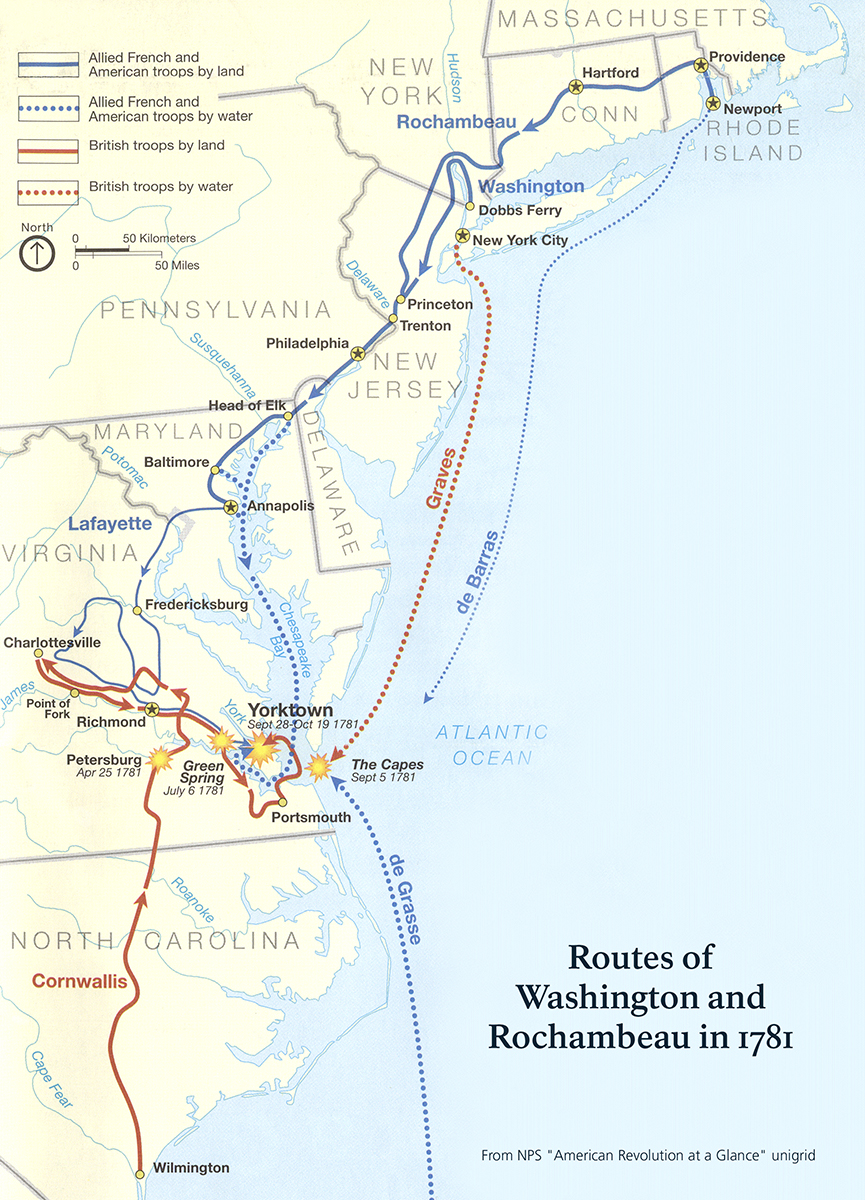
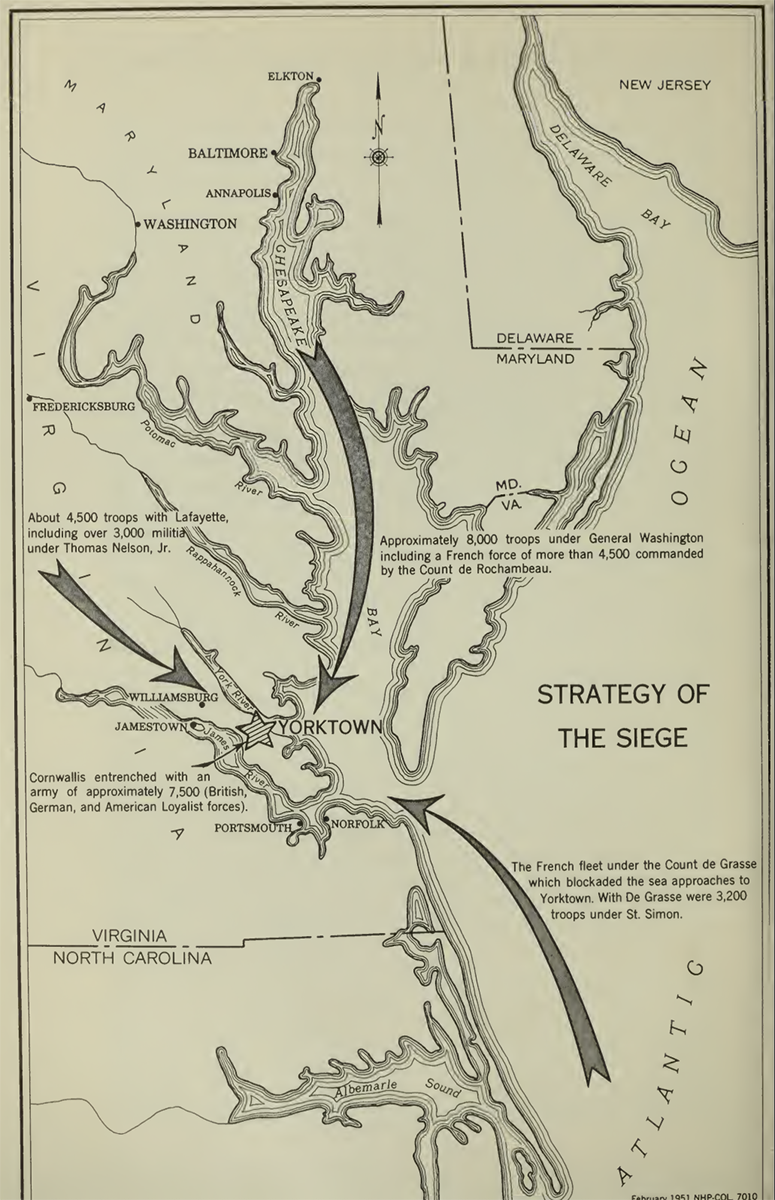
In early September, Washington and Rochambeau’s soldiers arrived at the Head of Elk (now Elkton) where the Chesapeake Bay reached its furthest northern extent in Maryland. Using a combination of road marching and water transport, the Franco-American army began moving its soldiers, equipment, and provisions into Virginia to join the troops under General Greene that were camped near Yorktown.
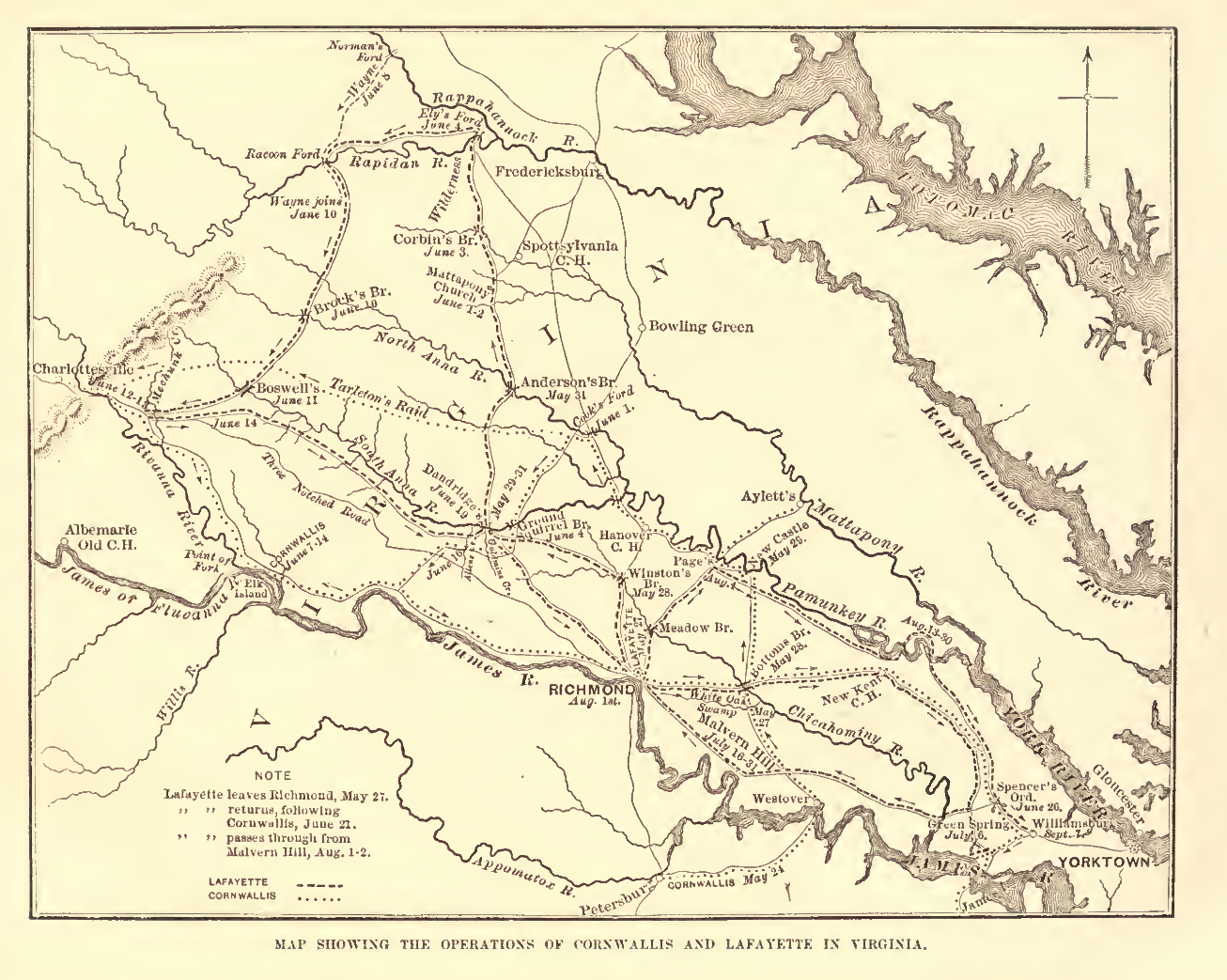
"SIR,--After very rapid march of near two weeks, attended with great fatigue, we at length are collected at this place, both french and Americans, amounting in the whole to near seven thousand, with an amazing train of ordinance and military stores--The light corps under Scammell, the advance of the french, and the detached Corps of our Army will embark with the stores &c to-morrow and proceed by water--the remainder of the Troops will move by Land, at least as far as Baltimore. The Count de Grass has arrived in the Bay with twenty-eight sale of the line, and landed a considerable Body of Troops who have joined the Marquis de la Fayette and taken post in the rear of Cornwallis, effectually cutting off his Retreat, as his whole Force does not consist of more than four thousand five hundred effective men, who are entrenched on the South side of the York river at a Town of the same name … Nothing can equal the Dispatch with which our opperations are carrying on, insomuch that by the 12th inst it is hoped that we shall clear out from this Post,--and it is computed that five weeks from that date will compleat the grand Design."
Maj. William Popham, aide-de-camp, to Gov. George Clinton of New York, Head of Elk, 8 September 1781
Sources
Henry Phelps Johnston. “The Yorktown Campaign and the Surrender of Cornwallis, 1781.” De Capo Press, 1971, 173.