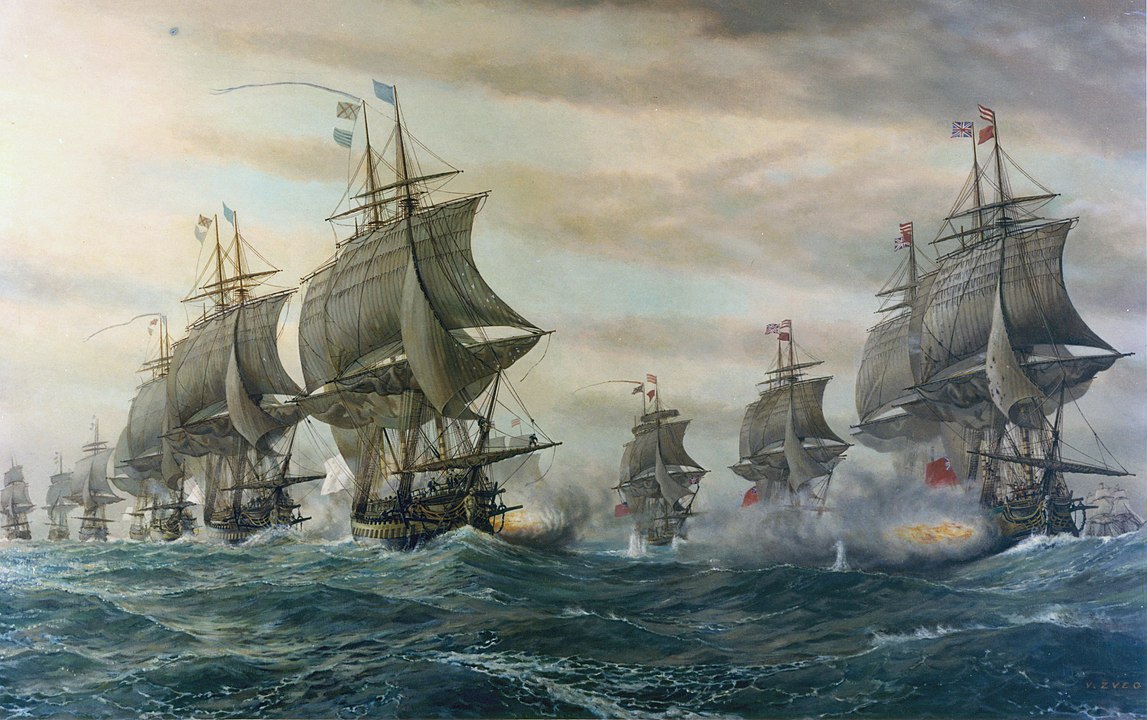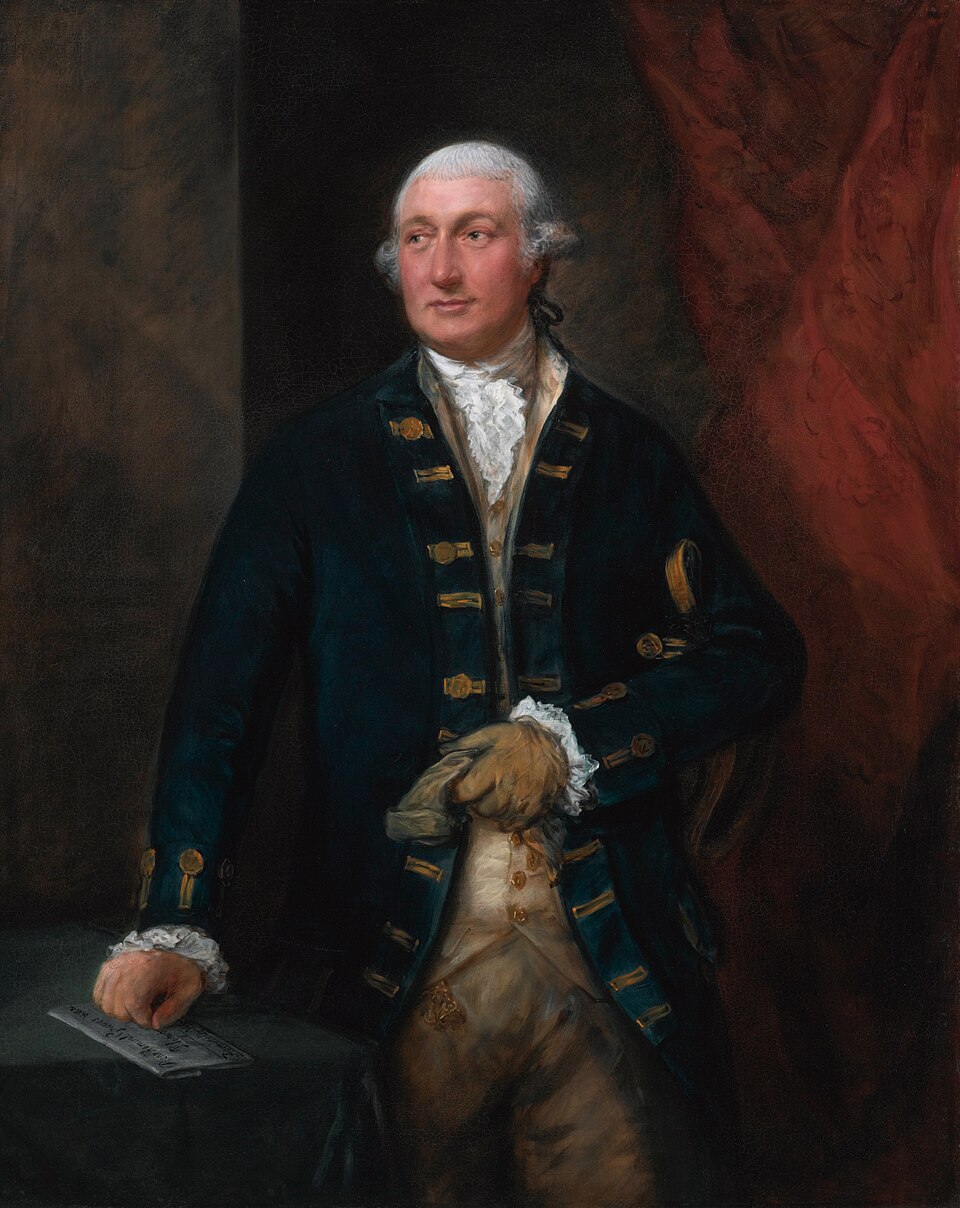
On 5 September, the British fleet dispatched from New York City under the command of R. Adm. Sir Thomas Graves’ fleet arrived at the mouth of the Chesapeake Bay. Graves found his way blocked by the larger fleet of Comte de Grasse; the two sides gave battle, the French emerged victorious, and the British withdrew to New York City to make repairs. Five days later, the ships led by Comte de Barras arrived with the cannon belonging to Washington’s and Rochambeau’s army.
"In the night of the 14th and 15th, we received a letter from M. de Grasse, which informed us that an English fleet of twenty sail had appeared off Cape Charles on the 5th; that although he had 1500 sailors employed in landing the troops of M. de Sait Simon, he immediately cut his cables and went out with twenty-four ships to meet the enemy; that Graves having the wind, the advanced guard only, under M. de Bougainville, had closed with the English squadron which was very roughly handled; that he, M. de Grasse, had continued in pursuit for some time; that upon returning to the bay, he had found there the squadron of M. de Barras; that this admiral having left Newport with our artillery for the siege, had arrived in the bay on the 10th; that he had met with and taken the two English frigates; that he had immediately despatched the ten transports of M. de Barras, those two frigates, and his other prizes … to bring the troops from Annapolis."
Rochambeau, In his Memoirs, 1817.“An Account of the Operations of the French Army in the United States of America, During the War of their Independence; Translated from the French of the Memoirs of Marshal Count de Rochambeau,” 1817, The American Register; or, Summary Review of History, Politics and Literature (1817-1817), Feb 01, 156.