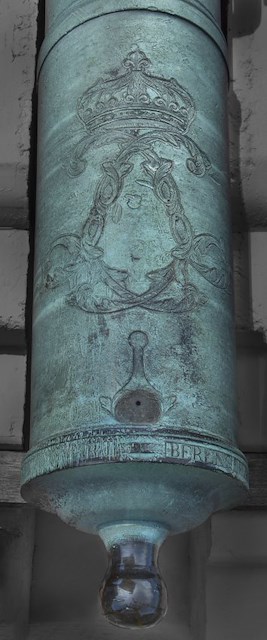
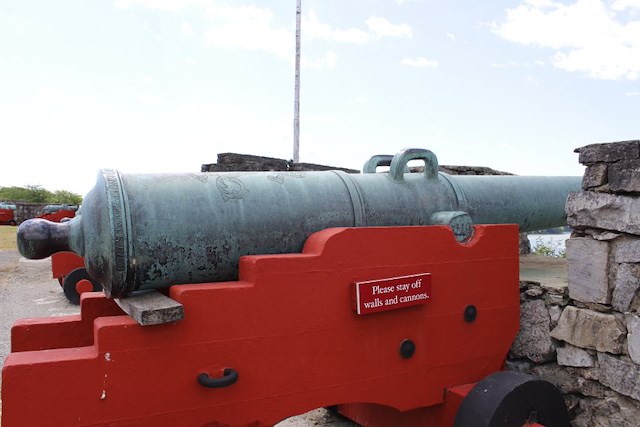
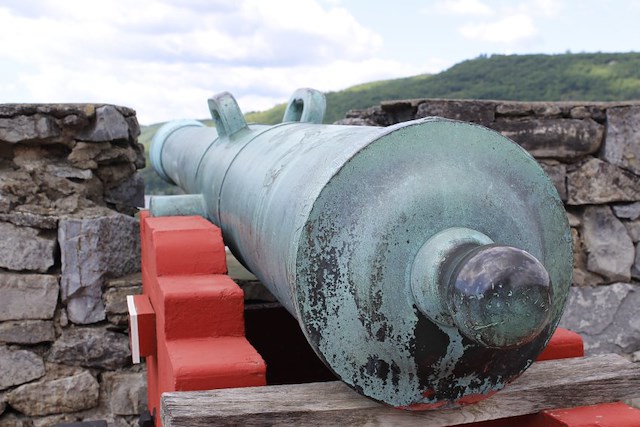
With the first parallel completed, the allied army was ready to begin the siege. On the afternoon of 9 October 1781, the Franco-American forces unleashed their artillery on the British fortifications in Gloucester and Yorktown, firing one shot per minute for a week and a half. The British artillery countered, although the damage from the Americans and French hindered their ability to return fire. Despite the advances of the Franco-American forces, the remaining British outer fortifications, Redoubts 9 and 10, prevented the soldiers from completing the required second parallel for the next stage of battle.
"An incessant cannonade now commenced om both sides, but our batteries and newly constructed works soon began to feel the effects of the powerful artillery opposed to them, and on the 10th scarcely a gun could be fired from our works, fascines, stockade platforms, and earth, with guns and gun-carriages, being all pounded together in a mass."
British Capt. Samuel Graham of the 76th Foot


![The Miriam and Ira D. Wallach Division of Art, Prints and Photographs: Picture Collection, The New York Public Library. “Washington firing the first gun [i.e. cannon] at the siege of Yorktown” New York Public Library Digital Collections.](https://www.thenmusa.org/wp-content/uploads/2026/01/york1.jpeg)