Yorktown: The Final Victory, July-October 1781

French and American Soldiers Assault Redoubts 9 and 10

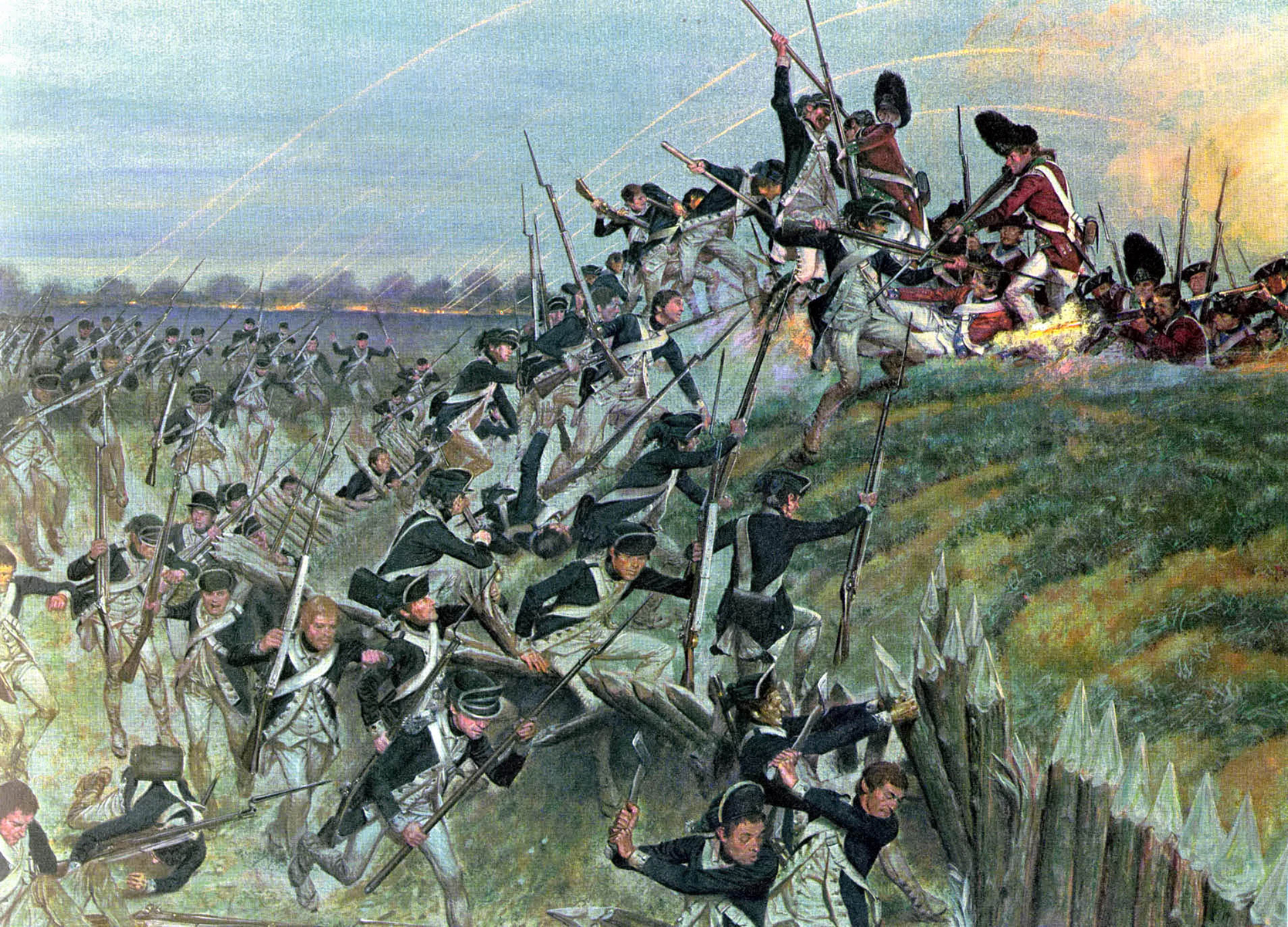
Storming of Redoubt 10. H. Charles McBarron, Jr., painting. Center of Military History.

Storming of Redoubt 10. H. Charles McBarron, Jr., painting. Center of Military History.

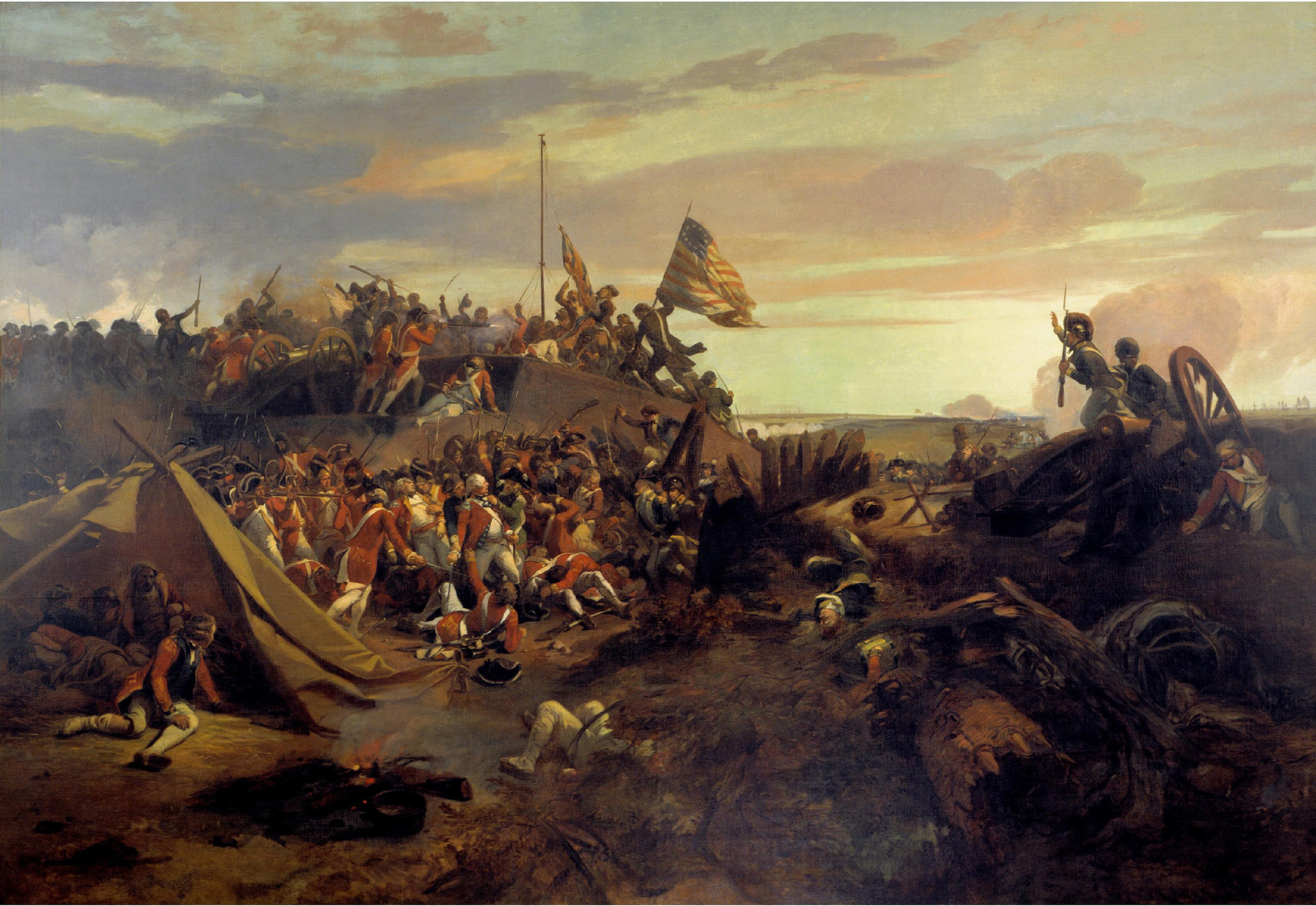
The Storming of Redoubt 10. Eugene Lami. Created 1840, Painting. Center of Military History.

The Storming of Redoubt 10. Eugene Lami. Created 1840, Painting. Center of Military History.

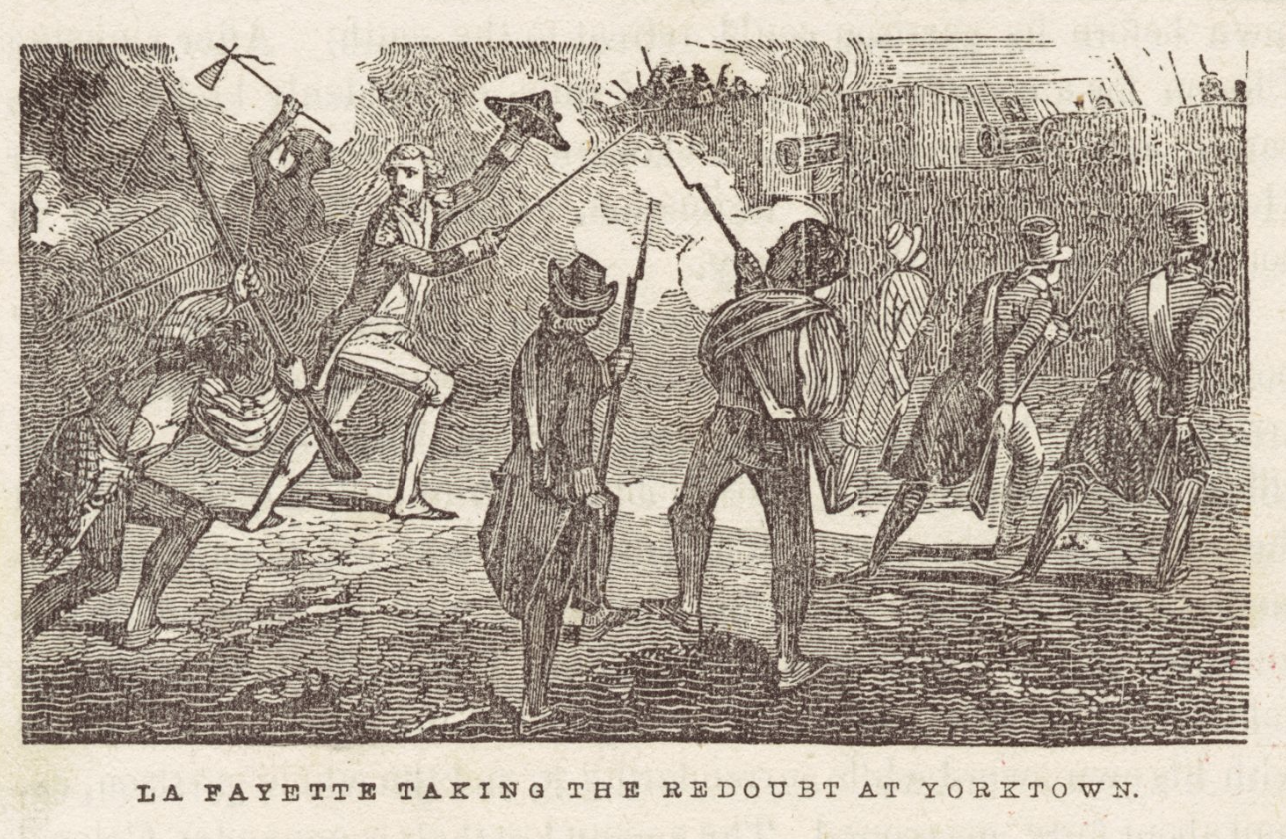
The Miriam and Ira D. Wallach Division of Art, Prints and Photographs: Picture Collection, The New York Public Library. “La Fayette taking the redoubt at Yorktown” New York Public Library Digital Collections.

The Miriam and Ira D. Wallach Division of Art, Prints and Photographs: Picture Collection, The New York Public Library. “La Fayette taking the redoubt at Yorktown” New York Public Library Digital Collections.

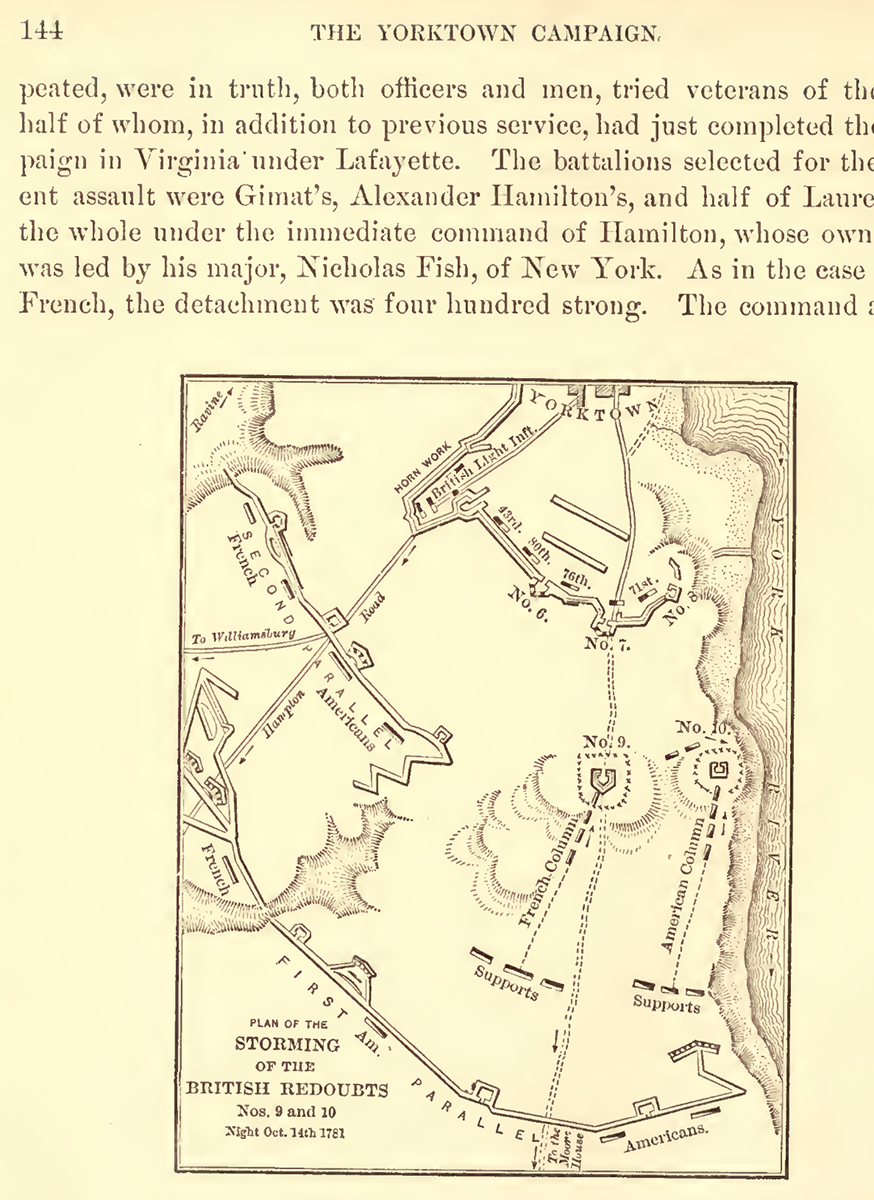
Henry P. Johnston. “The Yorktown Campaign and the Surrender of Cornwallis 1781.” New York: Harper and Brothers, 1881. p. 144.

Henry P. Johnston. “The Yorktown Campaign and the Surrender of Cornwallis 1781.” New York: Harper and Brothers, 1881. p. 144.

The Franco-American forces set their sights on taking Redoubts 9 and 10, a pair of square-shaped earthen forts ringed with sharpened stakes that lay between the first parallel and Yorktown’s main line of defense. The sappers and miners were sent in first to clear obstructions for the assault. Once the way was cleared, the soldiers quickly engaged the enemy by firing muskets and in hand-to-hand combat. The Americans took Redoubt 10 in about ten minutes, and the French took the more intact Redoubt 9 in about thirty minutes.

"The Baron Viomel commanded the left attack, & the Marq de la Fayette the right on which the light infantry were employed. In the left redoubt (assaulted by the Americans) there were ab 45 men under the command of Major Cambell: of which the Major, a Capt., and Ensign, with 17 men were made Prisoners. But few were killed on the part of the enemy & the remainder of the garrison escaped … The bravery exhibited by the attacking Troops was emulous and praiseworthy; fewer cases have exhibited stronger proofs of intrepidity coolness & firmness than were shown upon this occasion."

George Washington in his Diary, 14 October 1781
Sources
  • Henry Phelps Johnston. “The Yorktown Campaign and the Surrender of Cornwallis, 1781.” De Capo Press, 1971, 168.