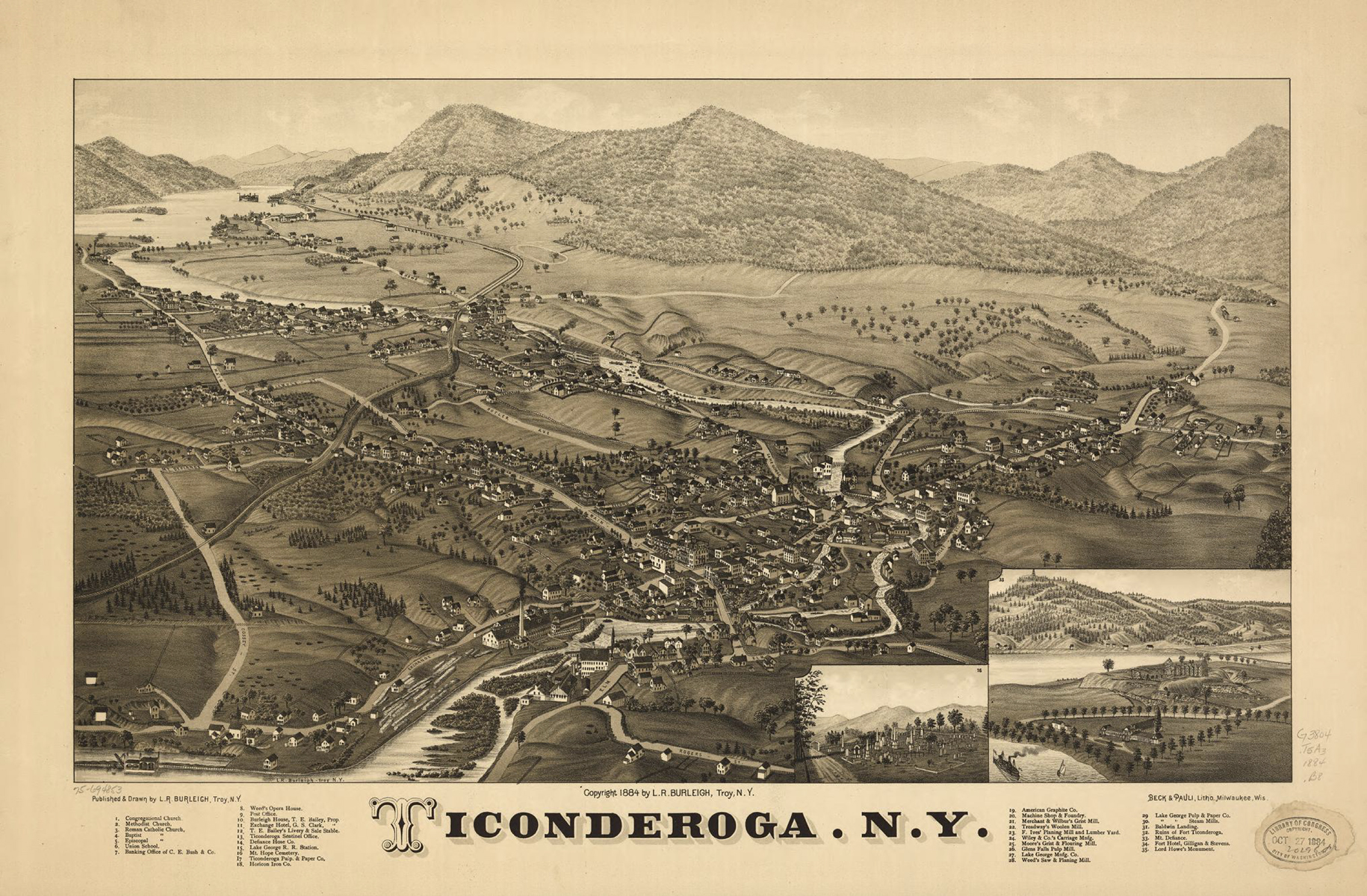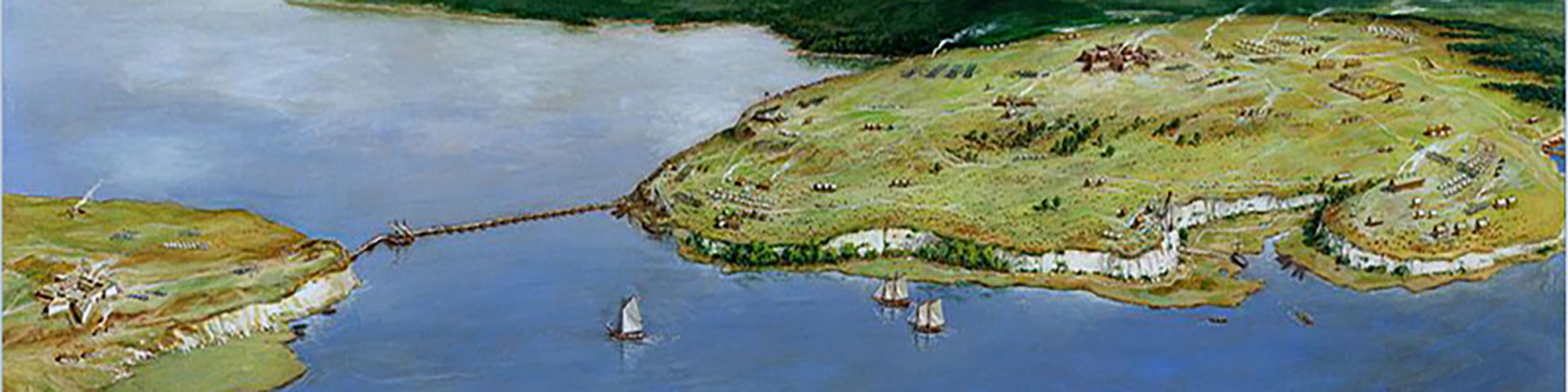
Mount Independence was one of the largest fortifications built during the American Revolution. ogether with Fort Ticonderoga, it guarded Lake Champlain against attack from Canada. et there were too few Patriot troops to properly man both strongpoints. When General Burgoyne’s assault force appeared, the American commander, Maj. Gen. Arthur St. Clair, had a difficult choice to make. Should St. Clair retreat and save his army or hold Mount Independence and risk annihilation?
"That the American forces at this time consisted of four thousand men, including the artillery and artificers, who were not armed and a considerable part of which were militia; that about three thousand men were fit for duty. Burgoyne's army consisted of about eight thousand men, with a lake force consisting of three fifty-gun ships; a thunderer, mounting eighteen brass twenty-four pounders; two thirteen-inch mortars, a number of howitzers, several sloops, gunboats, etc. Two batteries were erected in front of our lines on higher ground than ours; within half a mile of our left they had taken post on a very high hill overlooking all our works. Our right would have been commanded by their shipping and batteries they had erected on other side of the lake, so that our lines at Ticonderoga would have been of no service—that we should then have been necessitated to retire to Fort Independence. The moment we left Ticonderoga they could sail their shipping by us and prevent our communication with Skenesbourough. Then the only avenue to and from Fort Independence would have been a narrow neck of land leading from the Mount to the Grants. To this neck they had almost cut a road; a day more would have completed it."
Maj. William Hull, 8th Massachusetts Regimenthttps://dn720409.ca.archive.org/0/items/revolutionaryse00camp/revolutionaryse00camp.pdf Pp. 273 — 274.