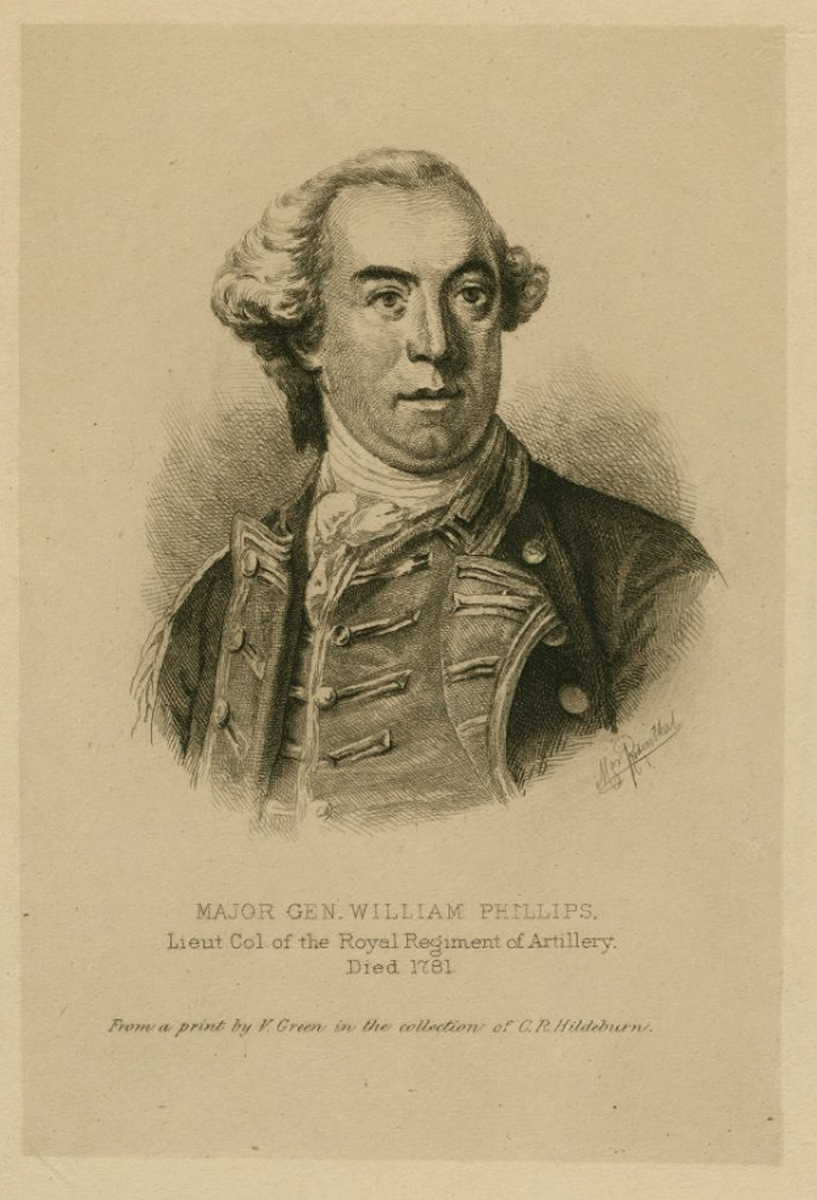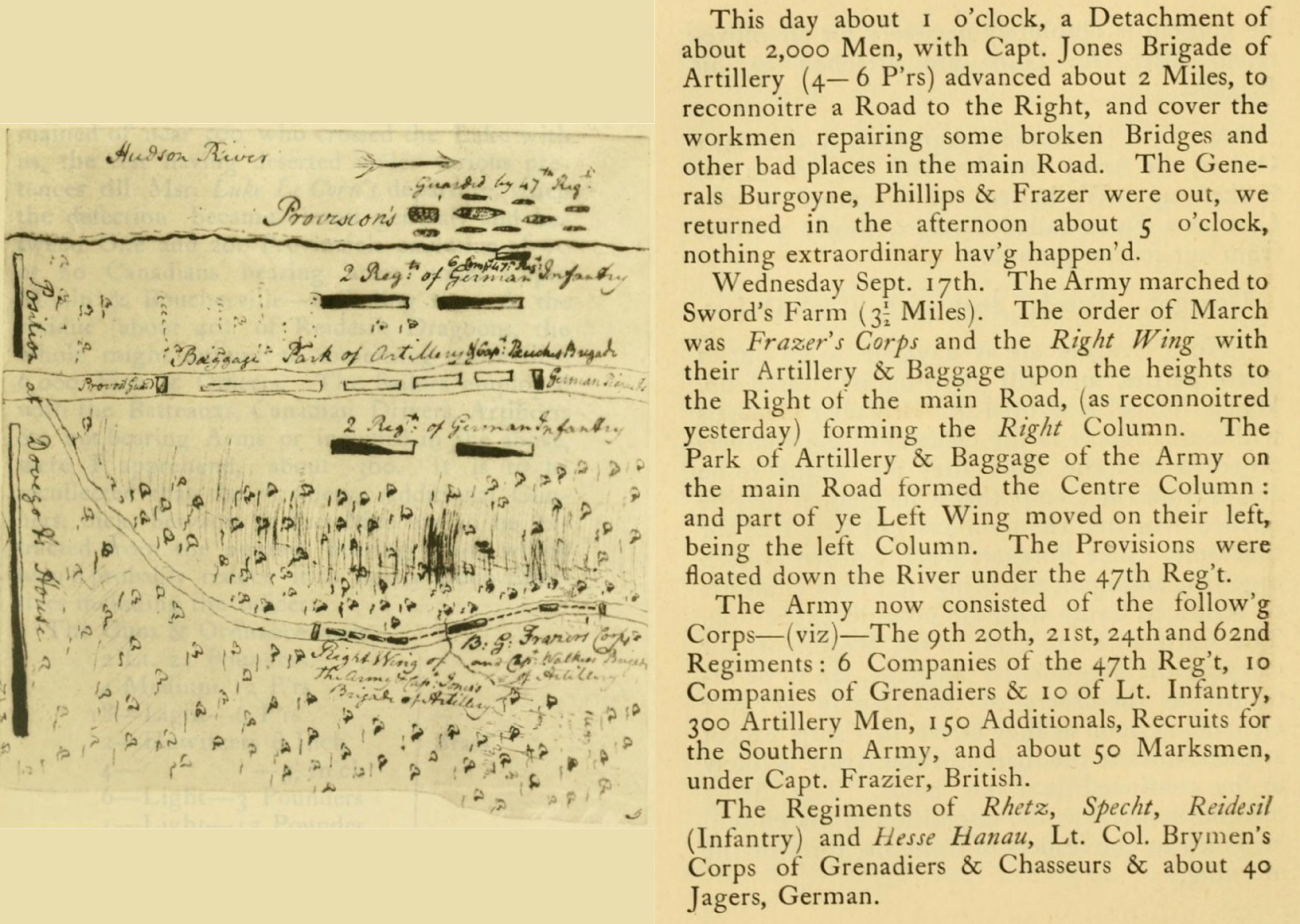
The portage, or overland route, between Lake Champlain and Lake George rises 221 feet over three miles while following the LaChute River. After the fall of Fort Ticonderoga and Mount Independence, British troops under Maj. Gen. William Phillips began the laborious task of hauling supplies, ammunition, cannon, bateaux, wagons, and animals over the LaChute portage and then south across Lake George.
"From July ye 14th to the 25 We were employed in bringing forward the Guns, Stores, and Provisions; and in transporting Gun Boats & Batteaux's from ye Saw Mill's Creek to Lake George. The Road is tolerably level, and where it wanted repairs the Rebel Prisoners were employed[,] being furnished with Tools and working under a Guard. We had about Two hundred of them confined in a Barn, and those who were not wanted either for the above purpose or Removing Guns and Stores, amused themselves in beating Hemp [a form of hard labor that involved mashing hemp stalks with a mallet to soften the fibers]."
2Lt. James M. Hadden, Royal Artilleryhttps://www.62ndregiment.org/James_Murray_Hadden.pdf Pp. 100-101.