The Saratoga Campaign: June-October 1777

British Diversion: Battles of Fort Clinton and Fort Montgomery

Holland, Samuel. A plan of the Forts Montgomery & Clinton as taken by His Majesty’s forces under the command of Genl. Sr. Henry Clinton the 6th. of Octr. [1777] Map. Library of Congress..

Holland, Samuel. A plan of the Forts Montgomery & Clinton as taken by His Majesty’s forces under the command of Genl. Sr. Henry Clinton the 6th. of Octr. [1777] Map. Library of Congress..

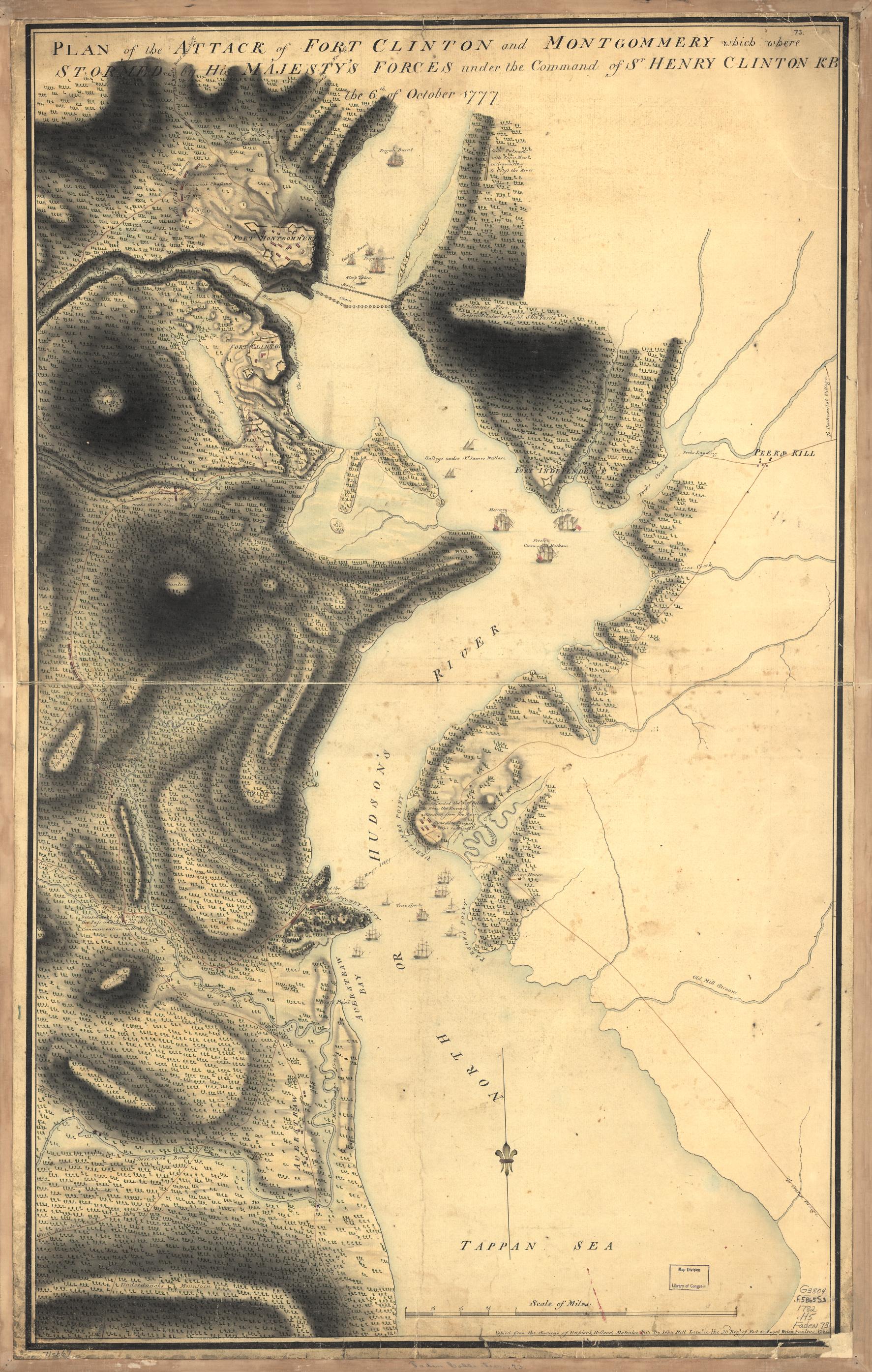
Hills, John. Plan of the attack of Fort Clinton and Montgomery which where sic stormed by His Majesty’s forces under the command of Sr. Henry Clinton, KB, the 6th of October. 1782. Map. Library of Congress.

Hills, John. Plan of the attack of Fort Clinton and Montgomery which where sic stormed by His Majesty’s forces under the command of Sr. Henry Clinton, KB, the 6th of October. 1782. Map. Library of Congress.

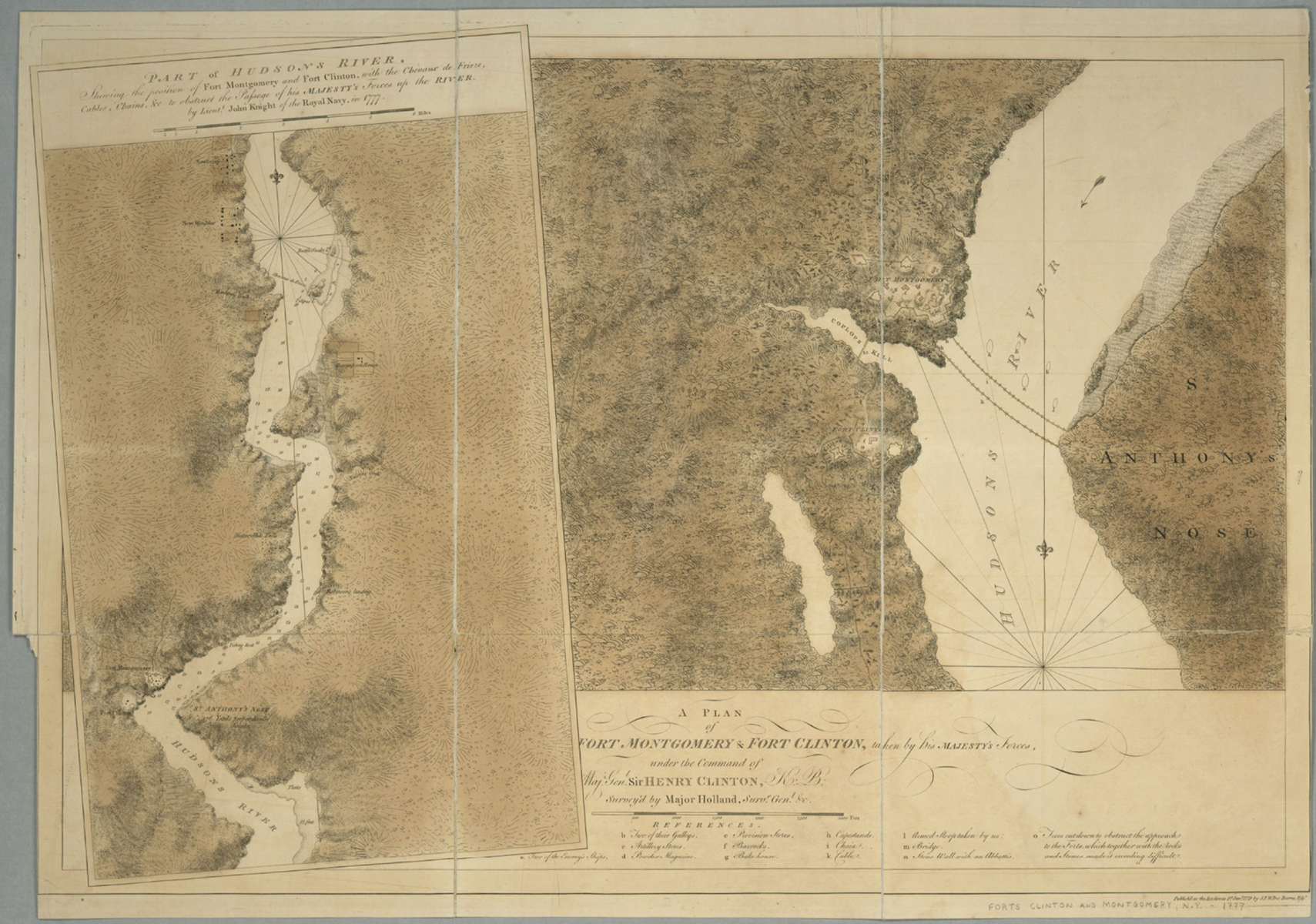
Lionel Pincus and Princess Firyal Map Division, The New York Public Library. “A plan of Fort Montgomery & Fort Clinton, taken by His Majesty’s forces, under the command of Maj. Genl. Sir Henry Clinton, K.B.” New York Public Library Digital Collections.

Lionel Pincus and Princess Firyal Map Division, The New York Public Library. “A plan of Fort Montgomery & Fort Clinton, taken by His Majesty’s forces, under the command of Maj. Genl. Sir Henry Clinton, K.B.” New York Public Library Digital Collections.

To threaten the Patriot’s southern flank, a British expedition commanded by Lt. Gen. Sir Henry Clinton sailed up the Hudson River from New York City. Standing in the way were 700 Patriot soldiers manning Forts Clinton and Montgomery. At dusk on 6 October 1777, some 2,100 British, German, and Royalist troops maneuvered against the forts’ poorly-defended landward sides and attacked. Could the thinly-spread American defenders hold?

"[The defenders occupied] three redoubts formed by three bastions of the fort—the men were in a single rank behind the parapet and were not sufficient in number to occupy those lines of the redoubts from whence opposition might have been made to the assailants—the garrison at first gave the assailants a regular fire by platoons or divisions—but soon run into a promiscuous fire as did the enemy—the assailants frequently changed their ground, but still continued their approach . . . The enemy came up several times—within 80 paces of the fort and were broke and repulsed, finally they formed a solid column from the center by files under cover of a rock at about 100 paces from the fort and in that form run up the parapet."

Capt. Thomas Machin
Sources
  • https://www.hudsonrivervalley.org/documents/401021/1049258/hrvr_20pt1_smithandjohnson.pdf/64f461c5-2e90-4b1d-a426-aa71f10a0da2  Pg. 18.