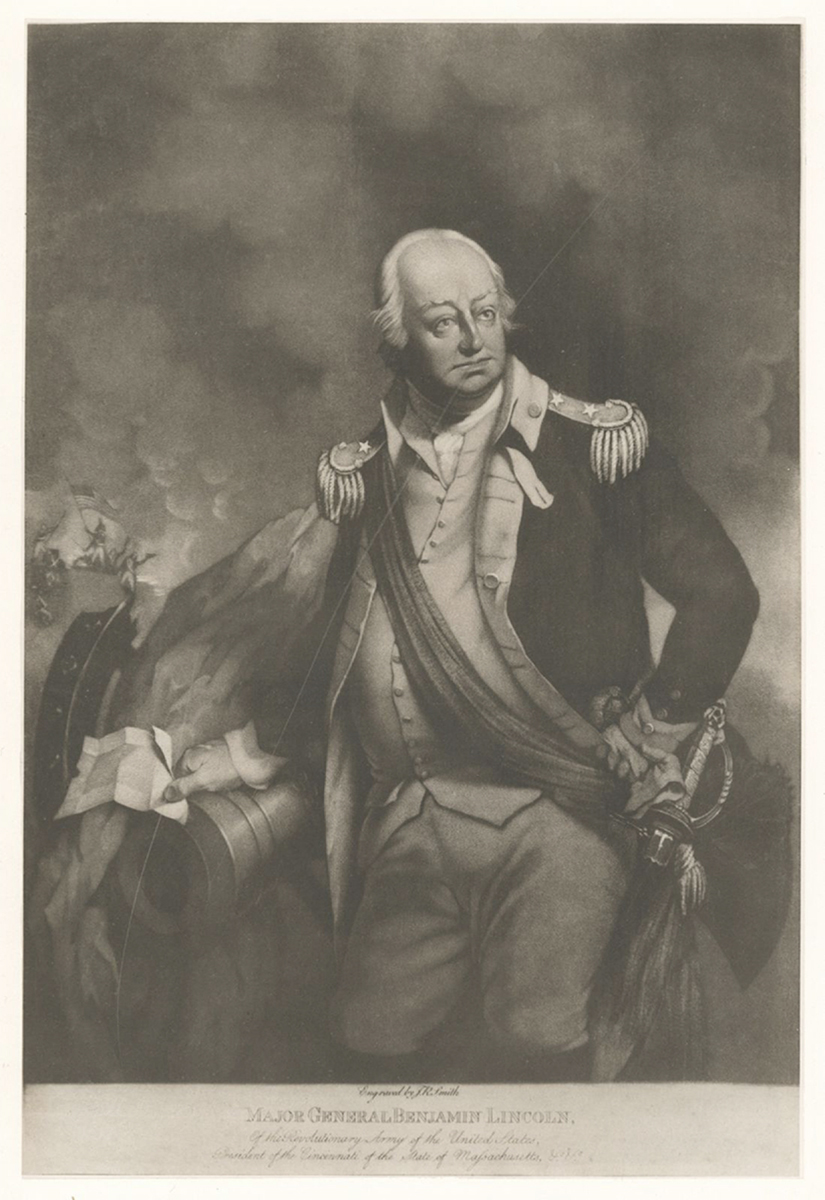
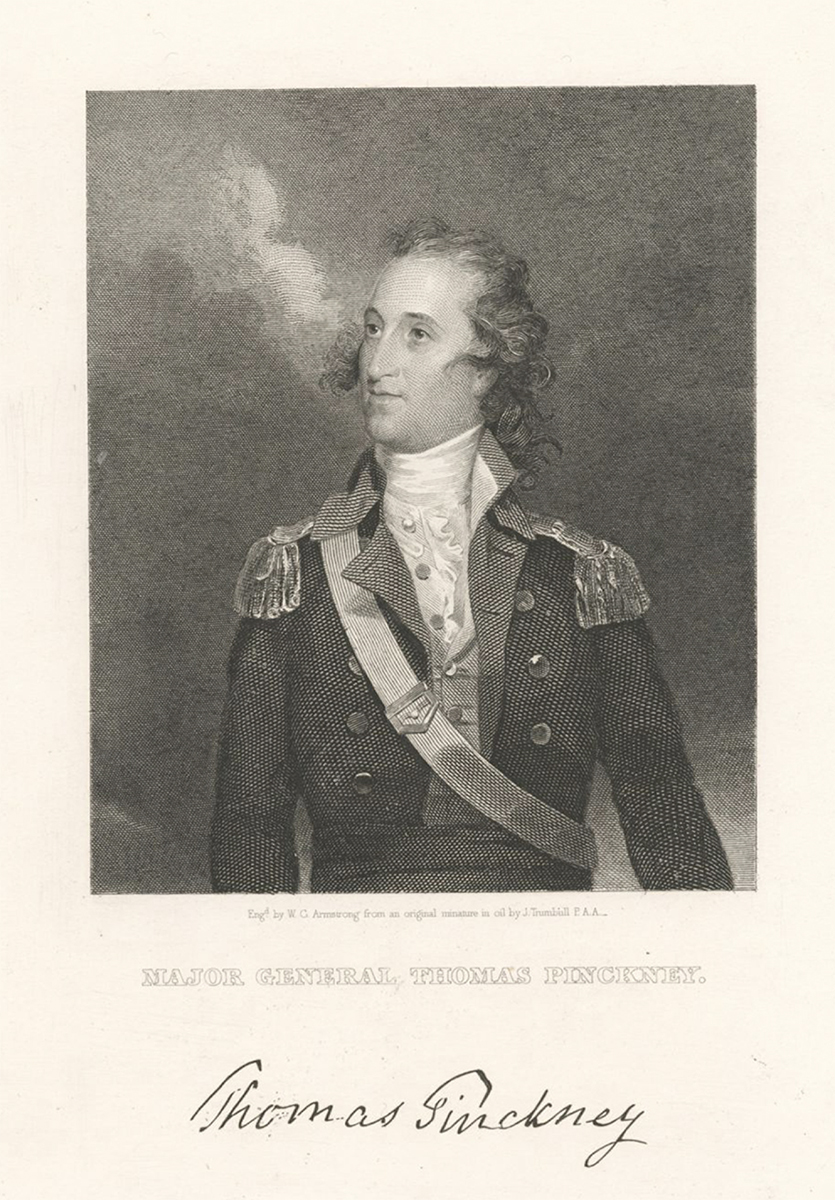
By 16 September, approximately 4,000 French soldiers had joined forces with around 2,000 Continental and militia troops under the command of Maj. Gen. Benjamin Lincoln. Count d’Estaing offered General Prevost the opportunity to surrender on honorable terms and gave him 24 hours to respond. Rather than accepting the offer, Prevost used that time to sneak another 800 British soldiers into the city. An officer in Lincoln’s army, Maj. Thomas Pickney, described the fortifications around Savannah as the siege began on 17 September.
"the Enemy's Line of Defence, which was fearcely begun when D'Estaing's Summons was given, had, in that Interval often Days, become formidable; it extended along the fandy Ridge or Bluff, on which Savannah is built, from the Swamp below the Town to Yamacraw Creek, which is its upper Boundary. It consisted of a Chain of Redoubts with Batteries, the whole covered in Front by a strong Abbatis. The principal Battery appeared to be in the Centre of the Line, where stood, when we first approached it, a large public Building of Brick, but which disappeared in one Night, and in a Day or two a formidable Battery was opened upon us from its Site. The next Work in Importance was the Spring Hill Redoubt, which was on their extreme Right, and commanded Yamacraw Creek, at the Mouth whereof was stationed a British Galley.
"
Maj. Thomas Pickney, 1st South Carolina Regiment
Sources
Hough, Franklin Benjamin, 1822-1885. “The siege of Savannah, by the combined American and French forces, under the command of Gen. Lincoln and the Count d’Estaing, in the autumn of 1779.” 1866, pp. 162-163.


![Ozanne, Pierre. Siège de Savannah fait par les troupes françoises aux ordres du général d’Estaing vice-amiral de France, en 7.bre, et 8.bre. [1779] Map.Library of Congress.](https://www.thenmusa.org/wp-content/uploads/2025/12/seige1.jpg)