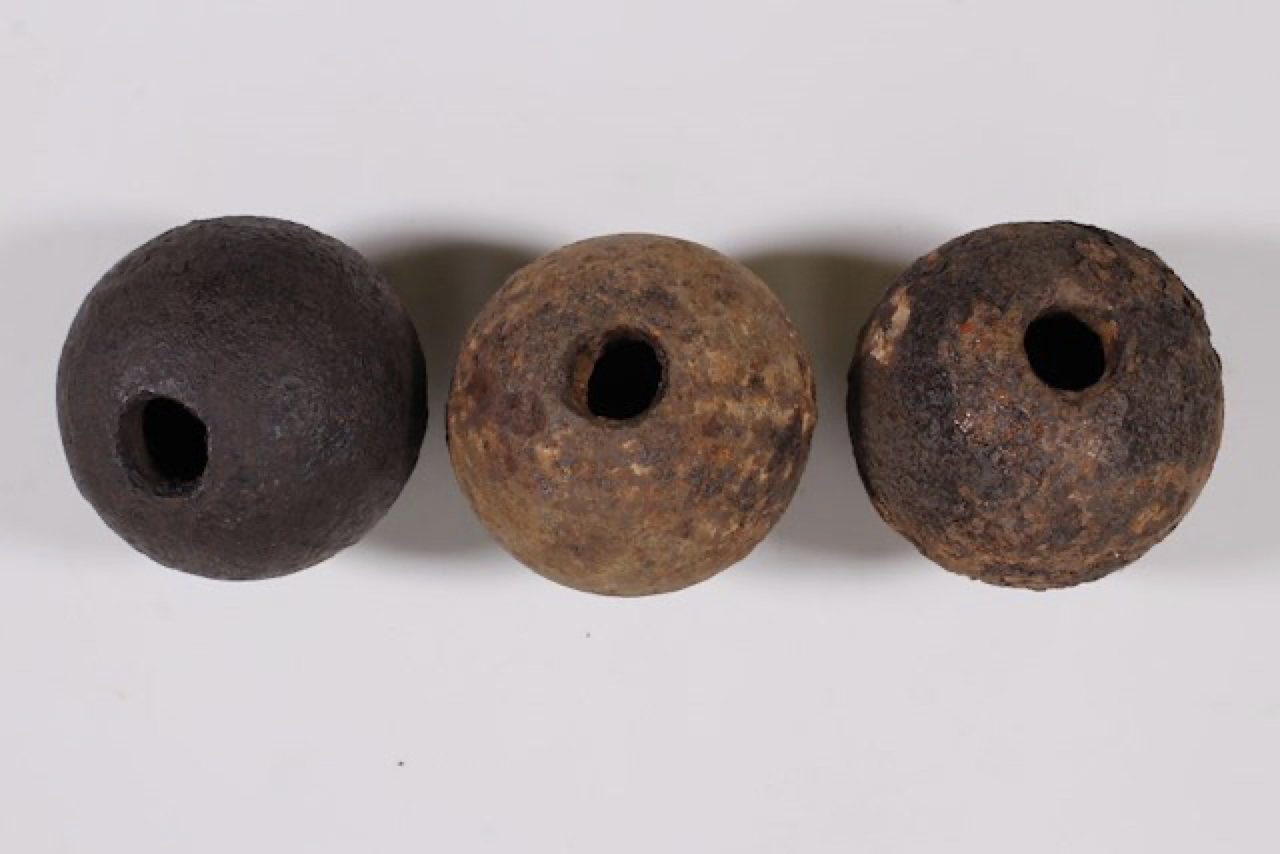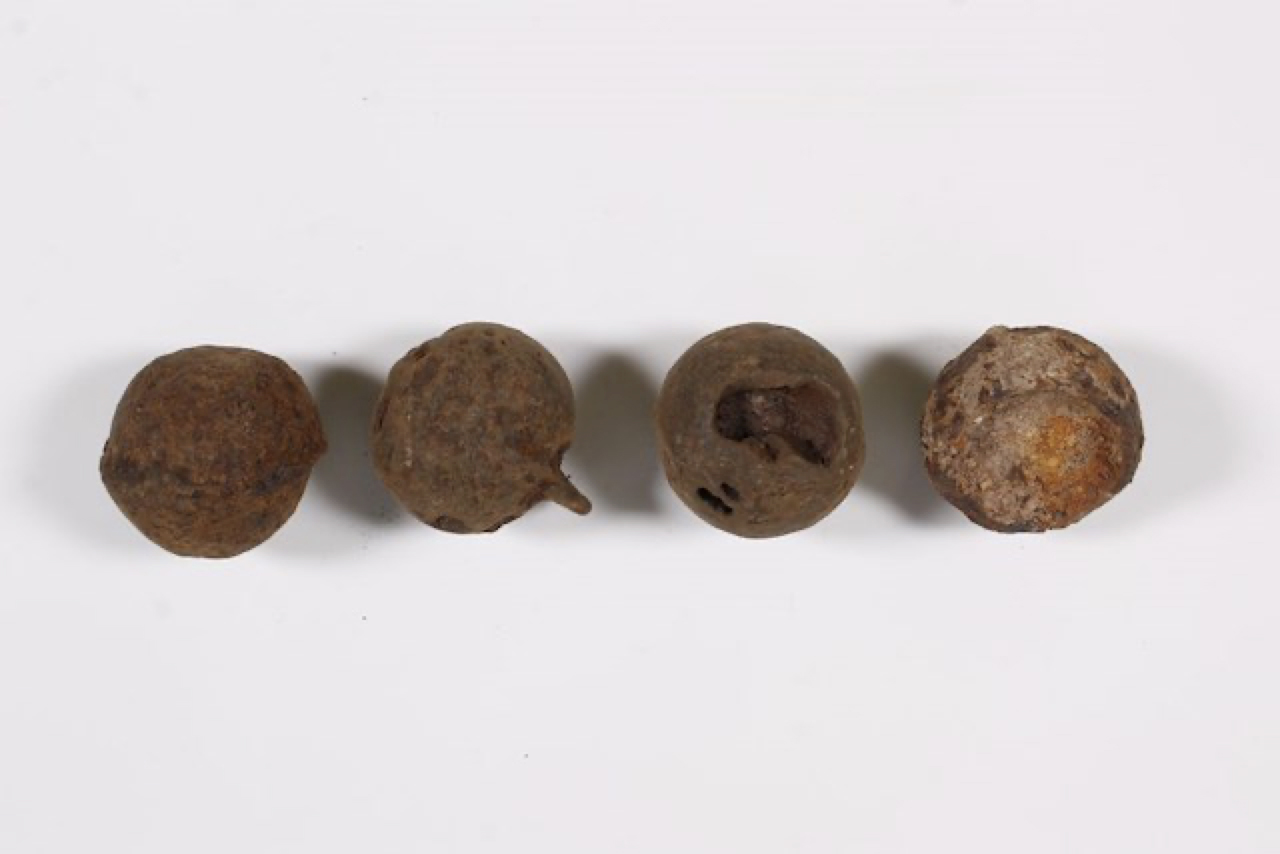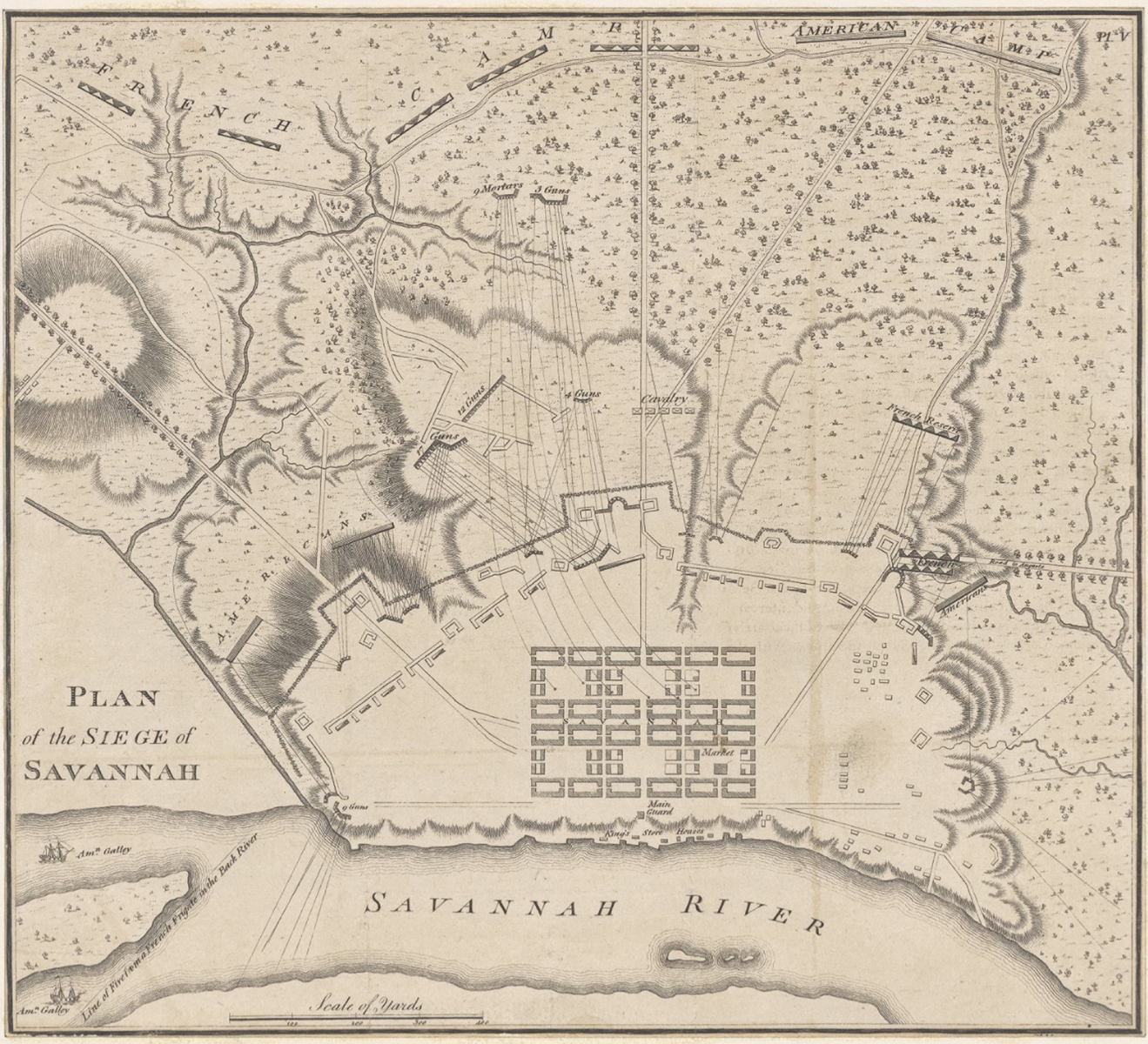
A combination of British fire, swampy terrain, and poor coordination between the American and French columns quickly turned the attack on the Spring Hill redoubt into a confused scrum.
"The marsh which covered the front of the attack had not been taken into account, and we maneuvered in it awkwardly. Those who lost only their shoes were the most fortunate. The scouts deserted us when the firing became a little brisk. The column on the right pressed on the one on the left in order to avoid the fire of a battery that was making things hot, so that the two attacks merged into one which was a great misfortune. We had to march in the open for 425 yards . . . As soon as the English saw us, they set up a very stiff fire against our troops and greatly retarded our march. Those who were stuck in the marsh not being able to follow, the column was broken and the first ones to reach the glacis were easily knocked down. The 600 rebels advanced to attack and added to the disorder. They looked like a crowd leaving a church."
2LT Francois d’Auber de PayrelongueKennedy, Benjamin (ed.) “Muskets, Cannon Balls & Bombs: Nine Narratives of the Siege of Savannah in 1779. Madison, WI: Beehive Press, 1974, p. 37.