The capture of Biggin Bridge still left the Americans an escape route eastwards to Georgetown via the Cooper River and King’s Highway. Clinton dispatched General Cornwallis and 2,500 fresh soldiers to cordon the Cooper River down to Sullivan’s Island. Cornwallis nervously observed the strong forts at Haddrell’s Point and Lemprieres Point, but was relieved when patrols found the positions empty, recently abandoned by Col. Francis de Malmedy and his panicked troops. Cornwallis was pleased with his bloodless victory, while an angry Lincoln learned of the loss of Lemprieres Point only after seeing British flags flying over the fortifications. Lincoln was further infuriated when Cmdr. Abraham Whipple’s Continental flotilla passively allowed the British fleet to negotiate treacherous sandbars and sail past Sullivan’s Island into a commanding position within the harbor, thus forging the final link in the encirclement of the city.
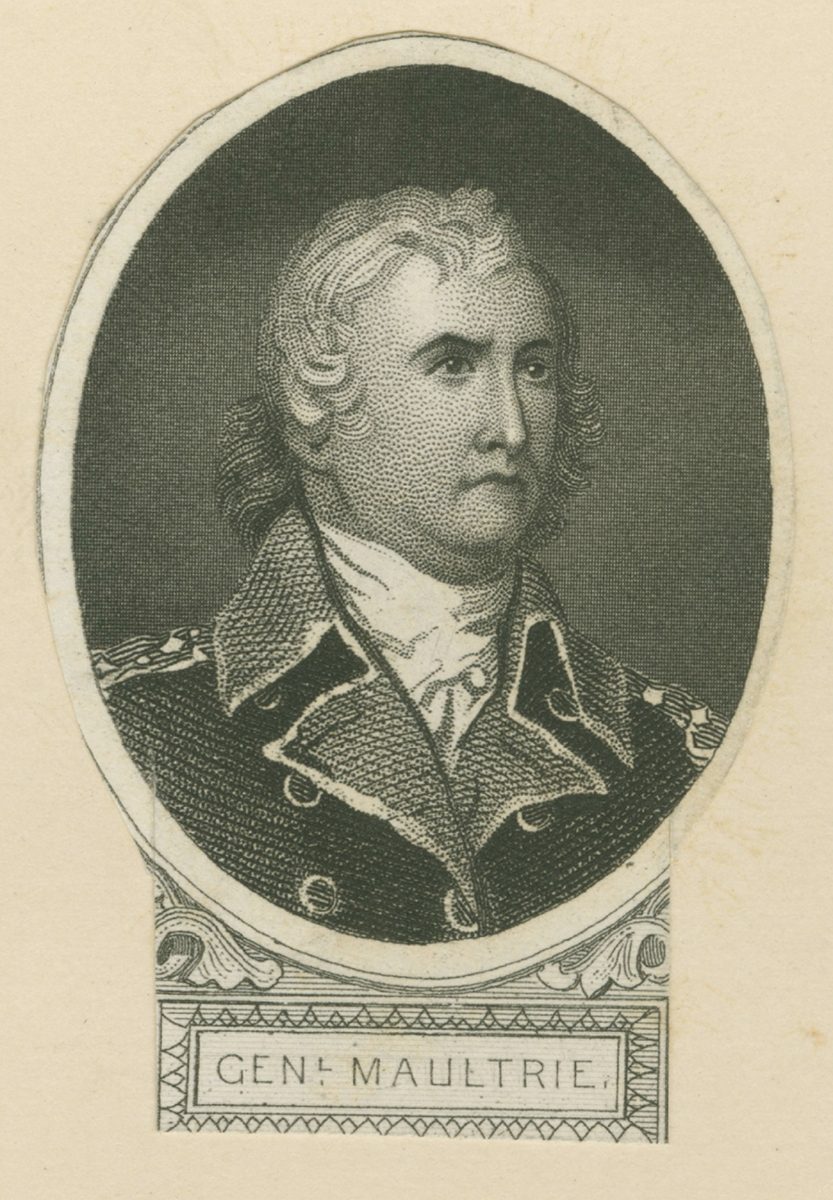
"We have altered our plan greatly; all our ships and gallies are ordered up to town, and their guns taken out and placed in the batteries, and manned by the sailors. . . . We are to sink some ships, to stop the channel from the exchange over to the marsh. . . . The reasons for altering the plan fixed upon them to dispose of our fleet, was, that Commodore Whipple did not choose to risk an engagement with the British fleet. I think he was right in the first instance, when stationed just within the bar to prevent the British fleet from coming over, as that was a dangerous place, but his second position . . . above Fort Moultrie within point blank shot of the fort, with his ships across, to rake the channel . . . it would have been impossible for them to pass without losing some of their ships. . . . The [British] fleet was of little service to the besiegers in blocking up our port, as all the reinforcements that we go . . . came in by land: it is true, Admiral Arbuthnot had the honor of having Fort Moultrie tamely given up to him without firing a single gun. . . . After the British fleet had passed Fort Moultrie, it was no longer of use to us, but rather a dead weight."
Col. William Moultrie


![Matthae, A. Plan von dem Haven und der Gegend von Charles Town in South Carolina … Sept. [1782] Map. Library of Congress.](https://www.thenmusa.org/wp-content/uploads/2025/12/map2.jpg)