
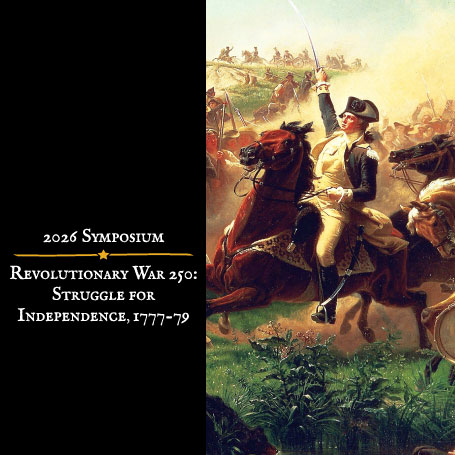
These three grueling years saw events of triumph and despair, “times that tried men’s souls,” during the struggle for independence. The summer and fall of 1777 saw the war’s decisive American victories in the sprawling Saratoga Campaign and the surrender of a major British field army, but the season also included George Washington’s defeats in Pennsylvania at Brandywine, Germantown, and the enemy’s capture of Philadelphia. American Soldiers endured months of cold weather, inadequate supplies, and disease in their frigid camps at Valley Forge in 1778, but by the encampment’s end late that spring, a better trained, more confident Army had emerged.
In 1778, Americans also celebrated an invaluable military alliance with France and a well-fought battle by Washington’s improved regiments at Monmouth Courthouse, New Jersey. Still, in 1779, British forces raided Atlantic coastlines, a New England expedition against British held Maine was a disaster, and a Franco-American army failed to capture British held Savannah in Georgia. Despite the much-welcomed assistance from France, the war was far from over.
The National Army Museum will present a full day symposium covering the focusing on the triumphs and defeats during this critical period to highlight the 250th Anniversary of the revolutionary War and our special exhibit, “CALL TO Arms: The Soldier and the Revolutionary War.”
Click here for more information and to register.
Veterans’ Hall, Virtual, Virtual (Zoom)