Yorktown: The Final Victory, July-October 1781

Cornwallis and Washington Negotiate Terms of Surrender

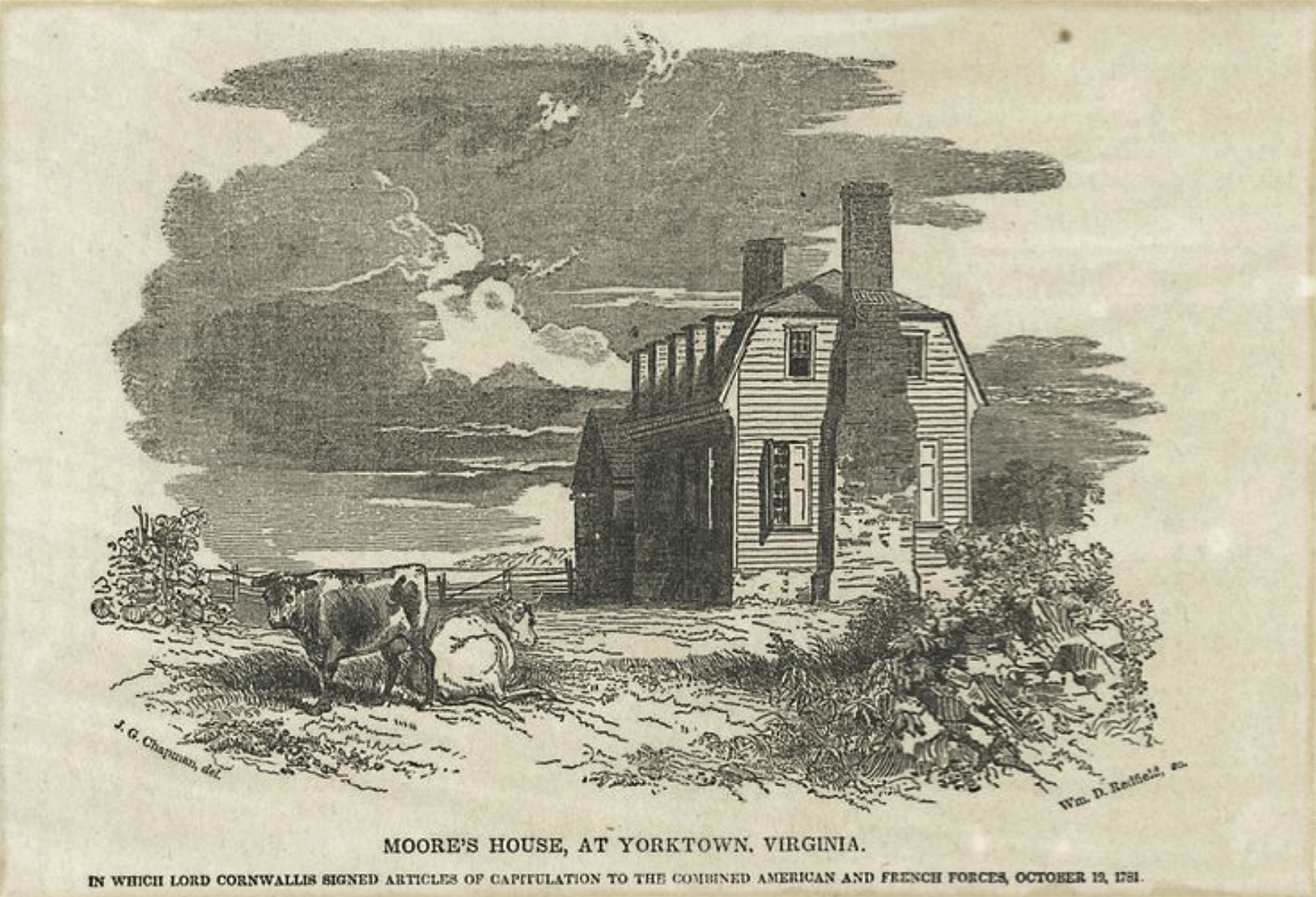
The Miriam and Ira D. Wallach Division of Art, Prints and Photographs: Print Collection, The New York Public Library. “Moore’s house, at Yorktown, Virginia. In which Lord Cornwallis signed articles of capitulation to the combined American and French forces, October 19, 1781” New York Public Library Digital Collections.

The Miriam and Ira D. Wallach Division of Art, Prints and Photographs: Print Collection, The New York Public Library. “Moore’s house, at Yorktown, Virginia. In which Lord Cornwallis signed articles of capitulation to the combined American and French forces, October 19, 1781” New York Public Library Digital Collections.

The Miriam and Ira D. Wallach Division of Art, Prints and Photographs: Print Collection, The New York Public Library. “Moore’s house, at Yorktown, Virginia. In which Lord Cornwallis signed articles of capitulation to the combined American and French forces, October 19, 1781” New York Public Library Digital Collections.

The Miriam and Ira D. Wallach Division of Art, Prints and Photographs: Print Collection, The New York Public Library. “Moore’s house, at Yorktown, Virginia. In which Lord Cornwallis signed articles of capitulation to the combined American and French forces, October 19, 1781” New York Public Library Digital Collections.

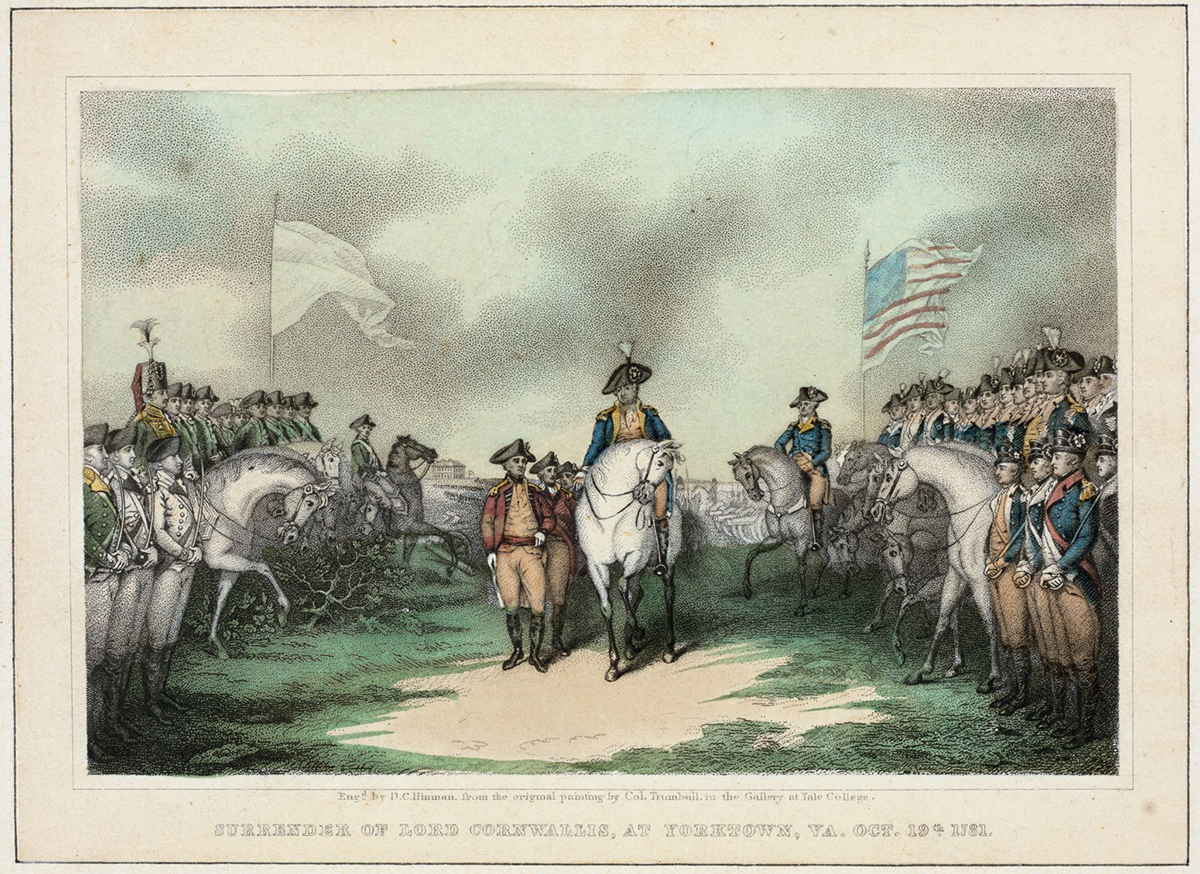
The Miriam and Ira D. Wallach Division of Art, Prints and Photographs: Print Collection, The New York Public Library. “Surrender of Lord Cornwallis, at Yorktown, Va. October 19th, 1781.” New York Public Library Digital Collections.

The Miriam and Ira D. Wallach Division of Art, Prints and Photographs: Print Collection, The New York Public Library. “Surrender of Lord Cornwallis, at Yorktown, Va. October 19th, 1781.” New York Public Library Digital Collections.

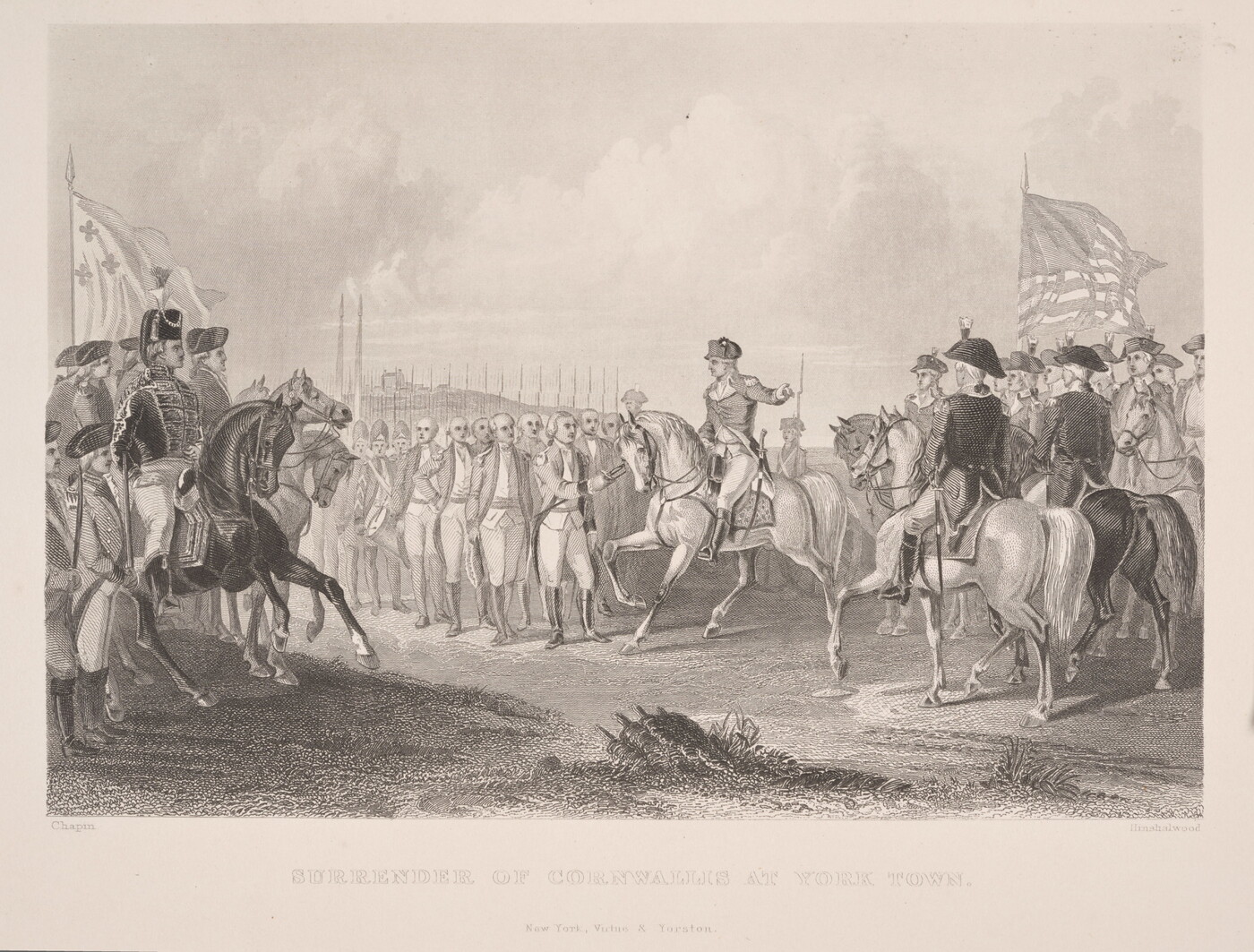
In the Articles of Capitulation, Washington refused the customary honors which would allow the British forces to fly their colors (flags) and for the band to play the Franco-American’s martial music in recognition of their fighting skills. This choice avenged the dishonor the British denied Maj. Gen. Benjamin Lincoln when he surrendered after a well fought battle in Charleston, South Carolina in 1780. During negotiations, Col. John Laurens responded to British Maj. Alexander Ross, when asked about the perceived slight.

"Your question, Major Ross, compels an observation, which I would have suppressed. You seem to forget, Sir, that I was a capitulant at Charleston, where General Lincoln, after a brave defense of six weeks’ open trenches, by a very inconsiderable garrison, against the British army and fleet, under Sir Henry Clinton and Admiral Arbuthnot, and when your lines of approach were within pistol-shot of our field works, was refused any other terms for his gallant garrison, then marching out with colors cased, and drums not beating a German or a British March…This remains an article or I cease to be a commissioner."

Col. John Laurens to Maj. Alexander Ross 18 October 1781
Sources
  • Thomas Balch. “Letters and Papers Relating Chiefly to the Provincial History of Pennsylvania.” Crissy and Markley, 1855, p. 284.