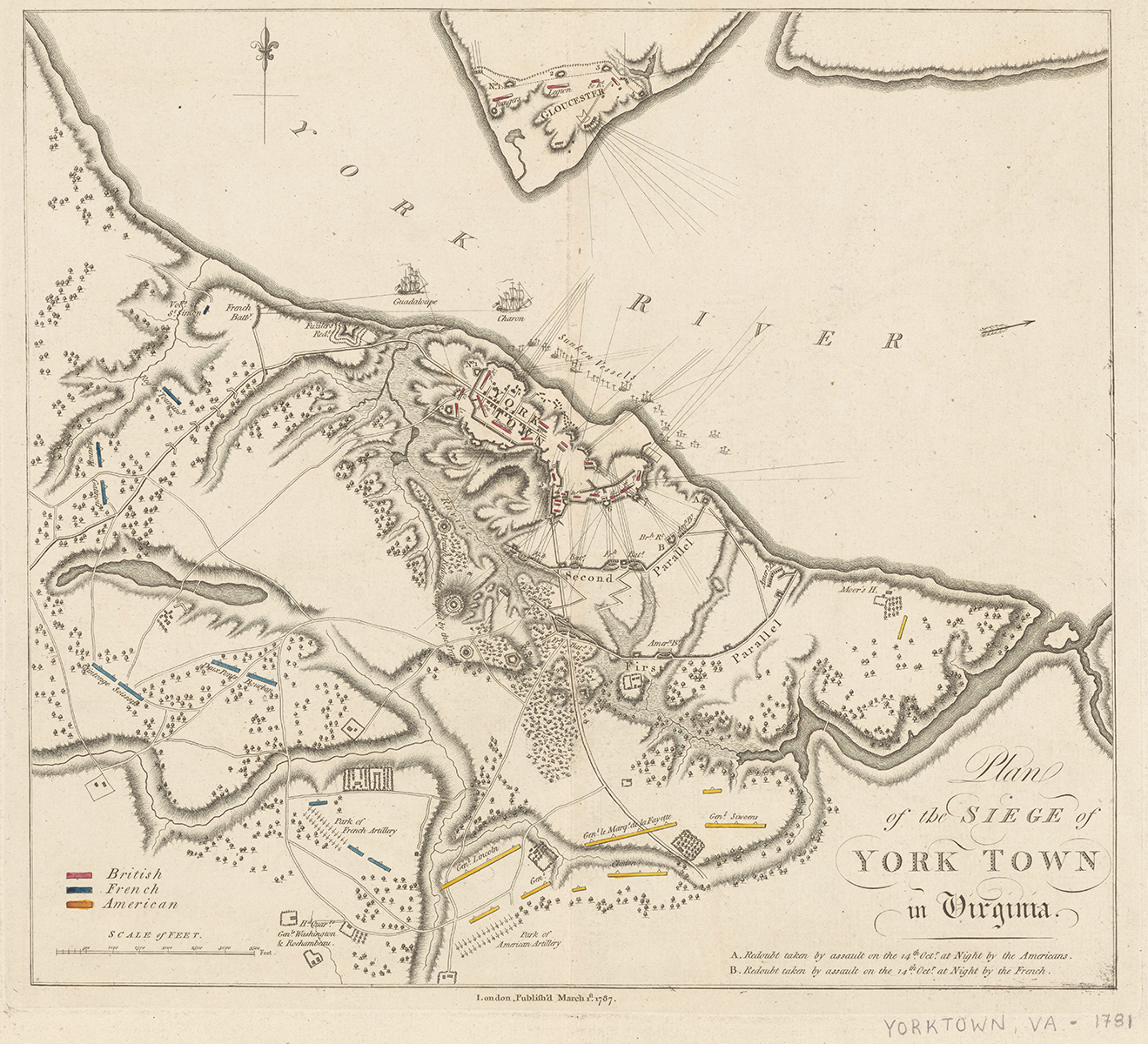
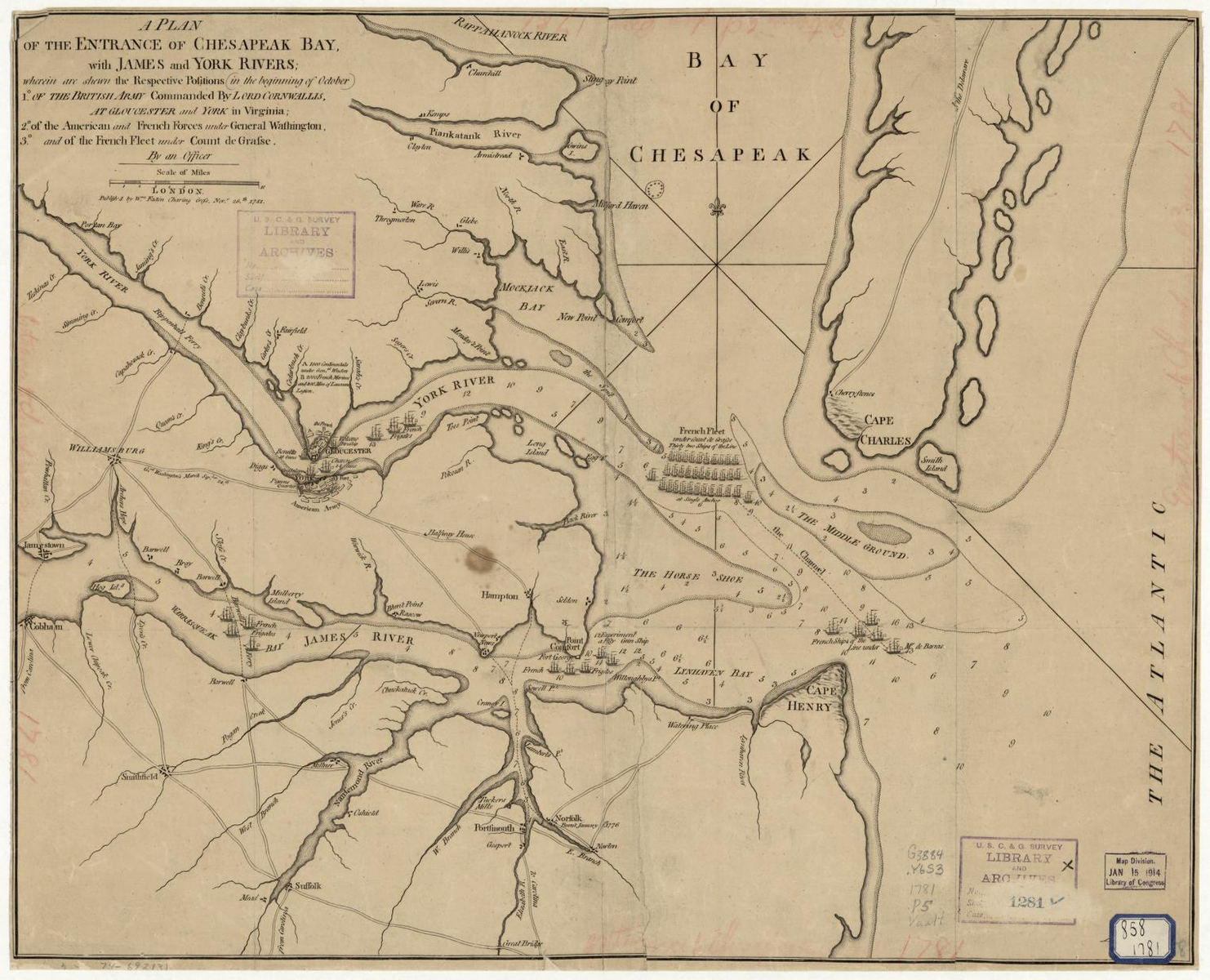
With Graves’ damaged fleet on its way to New York and the Chesapeake Bay firmly secured by the French, the senior allied officers including Washington, Rochambeau, and Washington’s chief of artillery, Brig. Gen. Henry Knox, met on de Grasse’s ship, the Ville de Paris, on 17 September. There they developed a plan to besiege Yorktown, battering the town with cannon as soldiers built trench works ever closer to the city. At Washington’s request, de Grasse agreed to stay in the Chesapeake until 1 November, giving the Americans two more weeks to defeat Cornwallis’ army.
"I have now to inform that I left Phila. on the 5th instt The same Day, on my Rout, I met the agreable News of the Arrival of Admiral D. Grasse in the Chesapeak on the 26th Augst with a formidable Fleet of 28 Ships of the Line & 4 frigates—and that he had landed 3000 Troops, who had formed their Junction with the Marquis—All possible Expedition was made to hurry on our Troops, Artillery, and Stores—which, I have the Satisfaction to inform you, have nearly all arrived at & near this place, with less Accident or Disaster, than might have been expected—I arrived myself, preceeding the troops on the 14th & very soon paid a visit to the french Admiral on Board his Ship to make our Arrangements for the Enterprize; which were most happily effected, & settled to mutual Satisfaction—The Admiral has taken his Position, for our Water Security to facilitate our Transportation & to Block the Enemy—Our Operations are fast drawing to a Point of Commencement—& by the 1st of Octo. I hope to open Trenches upon the Enemy’s Works."
George Washington to Nathanael Greene, 28 September 1781